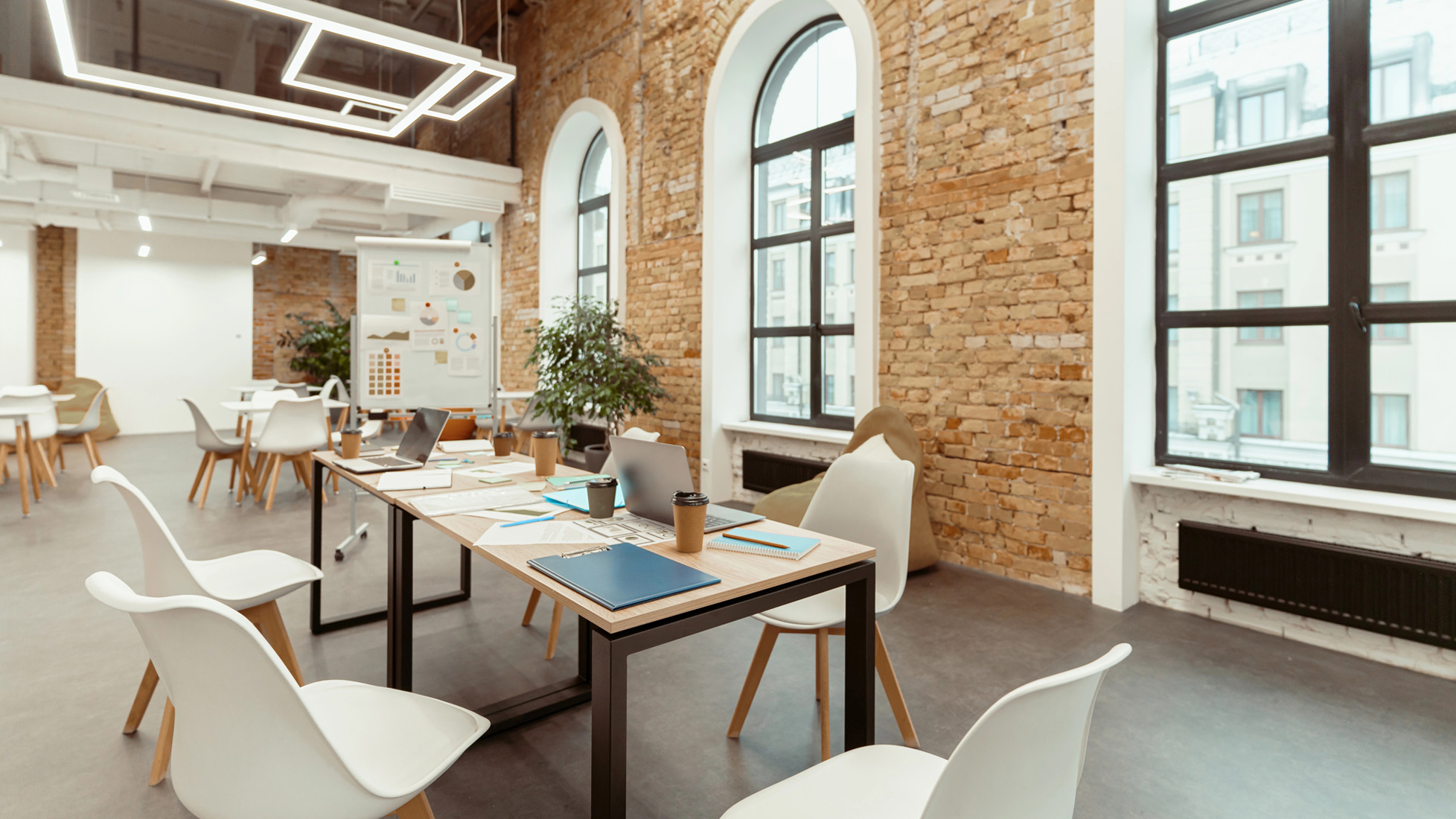
Today there are multiple generations of workers (Baby Boomers (1946-1964), Gen X (1965-1980), Millennials, also known as Gen Y (1981-1996) and Gen Z (1997-2012)) working alongside each other in UK workplaces. Having an age span of over 50+ years between work colleagues can bring with it a host of benefits including years of knowledge of an older generation and new perspectives from the younger generation, as well as potential generational issues such as communication barriers and bridging technology gaps. In order for all generations expectations to be met and for them to thrive it’s vital that an office is designed to be inclusive and look to accommodate all needs.
Creating a multigenerational office space design that’s all-encompassing irrespective of age and accommodates diverse needs requires careful planning and consideration. In this article we look at how can we design an office that allows multiple generations to come together, to work together, to collaborate and be productive.
Key Office Design Issues Between Generations
Office design for generational workers isn’t a one size fits all approach. It requires careful balancing of the type of office working styles, office layout, technology, culture as well as ensuring age-inclusivity and having the right amenities to ensure that all needs are met.
Work Styles
There appears to be a divide between generations regarding their preferred type of working style. Gen Z and Millennials tend to be more likely to want to work in the office while Gen X and Baby Boomers more often prefer the flexibility of remote or hybrid working.
According to the Office for National Statistics (ONS) and based on the Opinions and Lifestyle survey 29% of Gen X workers aged over 30 years are more likely to want the option of hybrid working compared to just 19% of Gen Z workers in their 20s and younger who prefer being in the office. Similar results were also highlighted by Moneypenny who surveyed 1,000 UK office workers over the age of 18 and found that hybrid working was most popular with 34% of Millennials and 31% of Gen X.
Forbes reports that in a study of 1,000 US employees, 53% of Millennial workers were most likely to look for another job if their employer stopped hybrid working and they had to work in the office.
Office Layout
Office layout can cause divisions between generations. These divisions are driven by numerous factors including types of working experience and working styles.
When it comes to office layout office space designed to be exclusively open plan can cause conflict, lead to disengagement and decreased productivity as older workers, those who are Baby Boomers and some Gen X are more likely to value structure, privacy and having a traditional workspace, a designated desk, and being able to choose to work in a quiet or private space to minimise distractions. Millennials and Gen Z tend to prefer open plan offices with adaptable and creative work spaces and break out areas that foster collaboration between colleagues, are more flexible and allow for a more social, cafe style office environment.
Technology
The Gen Z generation, brought up with technology as part of everyday life, look for office spaces that are high-tech in comparison to Baby Boomers and Gen X workers who often prefer less complex, more straightforward, traditional technology.
Baby Boomers tend to prefer phone calls and face-to-face interaction, whereas Gen X, Millennials and Gen Z are more likely to use technology such as text messaging, emails and digital platforms like Teams and Zoom to communicate with colleagues and customers.
Mitie found that there is a widening generational divide between workers when it comes to using artificial intelligence (AI) within the workplace where Gen Z workers embrace the use of AI whereas Gen X rely more on older and what they see as more dependable technology. 24% of Gen Z and 27% of Millennials stated that AI and automation were essential, compared to just 17% of Gen X.
There are also differences in how each generations want to use technology to “support their work” and “work-life balance” 37% of Gen Z employees say career progression is their priority, and they want to work in smart workplaces with technology that will support them in their day-to-day jobs and help to further their career ambitions. Whereas 43% of Gen X staff feel work-life balance is what is most important to them and they are more interested in having technology that is dependable rather than how “smart” or advanced the technology is.
Mark Caskey, managing director of Mitie projects said “We’re seeing a generational technology paradox emerging in the UK with a fundamental shift in how different generations approach workplace technology. It isn’t just the younger generations most interested in embracing technology. Gen Z recognise that using innovative technology and AI can support their future career success and Gen X want their technology to be dependable, so it enables them to perform their roles efficiently. Together, these preferences signal a workplace where success depends not just on adopting new tools, but on aligning them with the values and expectations of every generation. The challenge for employers is balancing these multi-generational needs, making sure all colleagues feel empowered with the right tools in the workplace in a way which suits them and supports their goals.”
Green Credentials
Environmental sustainability is another factor that is cited as leading to generational differences in the office. Baby Boomers and Gen X tend to focus on comfort and more traditional consistent and predictable working environments in comparison to Gen Z and Millennials who can be more concerned on the green credentials of an office.
Research by the Centre for Climate Change and Social Transformations (CAST), at Cardiff University and the University of Bath carried out a study of 1,000 across the UK looking at generational differences in “attitudes towards climate change” and found that “Millennials and Gen-Z experience greater levels of fear, guilt and outrage about the impacts of climate change compared to older Gen-X, baby boomer and post-war groups.” This may explain why Millennials and Gen Z may look to work for businesses that align with their social and environmental values and are influenced by office space that is eco-friendly and prioritises energy efficiency, digital solutions and recycling.
Lighting and Temperature
In the office space lighting requirements can differ between generations with Baby Boomers and Gen X preferring brighter, uniform lighting. Visual field size, light sensitivity, colour discrimination and visual acuity all decrease with age, which results in the older generation requiring more light in comparison to Millennials and Gen Z who often see overhead lighting as harsh and uninviting causing them to gravitate towards dimmer, warmer and layered lighting, such as desk lamps and natural lighting.
Thermal comfort can be another factor that differs between generations as Baby Boomers and Gen X maybe more sensitive to cold due to having slightly lower body temperatures, less of an ability to regulate temperature and a slower metabolism. However studies have shown that thermal comfort may be more of a gender factor and have a larger impact on women as women require higher temperatures to feel comfortable and perform at their peak.
Ergonomics
Although ergonomics is important for all ages there are differences between generations. A study looking at the correlation between workforce age and ergonomic risk factors found that “age-related physical changes—such as decreased strength, flexibility, and balance” necessitates “ergonomic interventions, including workstation redesign, adaptive tools, targeted training programs, and proactive health monitoring.”
Baby Boomers generally favour traditional workstations and comfortable seating that supports existing physical needs, such as lumbar support while Millennials and Gen Z tend towards more flexible seating that integrates technology. Gen X sit somewhere in the middle as they appreciate traditional workspaces and workstations as well as modern, flexible furniture.
Work Life Balance
Millennials and Gen Z are more likely to look for their office space to balance work and life while Baby Boomers and Gen X may prioritise a more strict separation of work and personal time and space.
Different generations also look for different facilities, amenities, and benefits within the workplace.
Designing An Office For The Generations
It’s clear that there are many differences in how different generations view office space and what they are looking for from their workplace. Given that’s it’s increasingly common for workforces to cross multiple generations it’s vital to address multigenerational issues and to adapt office space to be inclusive and accessible to everyone. Below we outline some of the many ways this can be achieved through office design.
Accommodating Different Work Styles
Designing office space to allow for different workstyles is a key way of attracting and retaining a multigenerational workforce. In order to achieve this the office space must provide a variety of settings (or allow for a degree of flexibility so that office space can be rearranged or reconfigured as required) that will appeal to each generation.
An Activity Based Working (ABW) approach can provide a variety of different settings, each tailored to the task in hand, allowing staff to choose where they want to work, providing private, quiet, collaborative, breakout and social spaces which enable staff to work productively.
Agile Working (AW) is another approach that can meet multigenerational needs as it enables staff to work from anywhere e.g. in the office, from another office, from home or on the move. AW enables Millennials and Gen Z staff to have the flexibility of choosing hybrid working while Baby Boomers and Gen X can choose to work within the office if they so choose.
Balanced Flexible Workspace
Workspaces must be balanced and flexible if they are to allow for different working styles and to cater for a generational workforce so it’s important to think about how different layouts can support a spectrum of multigenerational needs and abilities as well as taking into account a business’s needs, processes, goals, and company culture.
Baby Boomers and some Gen X value structure and quiet, private spaces while Millennials and Gen Z prefer office spaces that are open plan and allow for collaboration and socialisation, so an office space designed to include dedicated private or quiet working areas that allow staff to carry out work that requires quiet or concentration, away from high traffic zones; collaboration or open plan spaces that bring staff or teams together and which encourage spontaneous interactions and teamwork; breakout and social areas that allow staff to unwind, relax, take a break or socialise and “touchdown” spaces for staff who normally work remotely or who work between home and the office will provide the type of office space that meets the needs of each generation.
Where office space won’t allow for every type of space that’s deemed to be required, building in office layout flexibility through adaptable, modular furniture that can be rearranged and movable partitions or room dividers that can be used to change the office layout can allow businesses to adapt their space as required.
User Friendly Technology
An office that has a multigenerational workforce needs to carefully consider what technology to implement during the office design phase otherwise there is a risk that some generations will feel excluded.
Multigenerational workers will have varying degrees of technology literacy. It’s therefore important that any technology incorporated within the office space is as intuitive, user-friendly, reliable and accessible as it can be while also balancing the demand for more advanced technology required for some workplace tasks like hybrid working.
It’s a good idea to utilise multiple communication channels from face-to-face meetings to phone calls, emails, text and instant messaging to Teams and video conferencing to accommodate generational communication preferences.
Having a mix of traditional, easy to use digital and high-tech solutions within an office space ensures everyone can be engaged, productive and every generation is ready to do their best work, regardless of age or generation.
Sustainability
There have been multiple drivers towards sustainable office design including the government’s zero emissions targets for 2050 and energy price increases as well as a generational push for office space which is eco-friendly. This has led many companies to review their eco-credentials with office space being one of the main areas where businesses look to make improvements.
To accommodate a multigenerational workforce and be sustainable an office needs to balance a traditional working environment and comfort with environmental responsibility by using eco-friendly materials, eco and ergonomic furnishings and furniture, natural and energy efficient lighting and equipment, water efficiency, biophilic elements and smart technology within the office space.
Controlling The Office Environment
Office lighting and temperature can cause a generational divide so it’s important to ensure lighting in the office environment supports staff of all ages.
Lighting should be treated as a priority during the office design phase.Use natural light wherever possible. Where natural light isn’t available use artificial lighting that mimics natural light. Provide areas with varied lighting or where the light level can be fully controlled such as desktop lights and lamps which allow light levels to be increased or dimmed which will provide the control Millennials and Gen Z prefer. Also consider the colour of the lighting used. Warm colours can provide a calming atmosphere; cooler colours can promote focus.
Temperature is another factor which can cause generational and gender disagreements in the office. What feels comfortable for one person may not be ideal for another. Installing an air conditioning system or upgrading an old system can allow staff to better control the temperature within the workplace.
Flexibility and Comfort
Designing an ergonomic workspace for multiple generations requires a flexible approach that addresses and supports the varying physical needs, preferred work styles, and technology comfort levels across the ages.
A multigenerational office requires a blend of flexible, adjustable, ergonomic and diverse office furniture to appeal to Baby Boomers, Gen X, Millennials and Gen Z and which addresses the need for private, quiet, collaborative work and areas for socialisation. Offering a choice allows staff to be able to select a workspace (and furniture) that fits their physical needs.
Consider adjustable and ergonomic workstations with height adjustable standing desks also known as adjustable or sit stand desks and ergonomic seating with seat depth, lumbar support, and armrests alongside other more flexible furniture including modular desks and seating which can be easily arranged or changed with dividers, partitioning and privacy screens to accommodate different working styles and layouts. Also consider collaborative and breakout area furniture that will allow teams to come together to brainstorm or collaborate and soft seating and furniture to promote relaxation and social breaks.
Office pods or booths are also a great way to create a small meeting room or an individual private space for virtual meetings, phone calls or simply quiet work as a non-permanent structure that can moved or relocated as required.
Workplace Benefits
Different generations look for different workplace spaces, benefits and amenities supporting their life stage. Millennials and Gen Z are more likely to prioritise amenities like childcare facilities, games and wellness rooms, fitness centres, gym spaces, showers, changing facilities and bike lockers when looking for employment. Whereas Baby Boomers and Gen X may value quiet spaces more.
Having a variety of workspaces including a tea point or kitchen, cafe, collaboration spaces, wellness rooms, games room, and benefits like childcare facilities and gym or fitness area will allow a business to cater to multigenerational needs.
Coexisting In The Workplace
Today many businesses employ multigenerational workforces. As a result, the need for workspaces that cater to and support different working ages is becoming more and more important.
By designing spaces to be flexible, adjustable, ergonomic, and technologically available, multigenerational workers can feel valued, engaged, and productive. Office design that’s carefully planned and executed with multiple generations in mind can help to unlock the potential and support the health and wellbeing of every staff member irrespective of age.
JBH Refurbishments, Experts In Generational Office Design and Refurbishment
JBH Refurbishments are a cat a and cat b fit out contractor and have over 30+ years experience in Kent and London office design, office refurbishments and fit outs which address the needs of multiple generations. We can provide the right expertise for your Kent or London office refurbishment. We understand what’s required to carry out an office design and refurbishment to meet your business and staff needs.
From your brief, to putting together a project plan, to developing your office design and layout to delivering your office fit out JBH Refurbishments will provide the right expertise for your project providing peace of mind. You can contact us on 0333 207 0339 or via our contact page for a free on-site consultation.