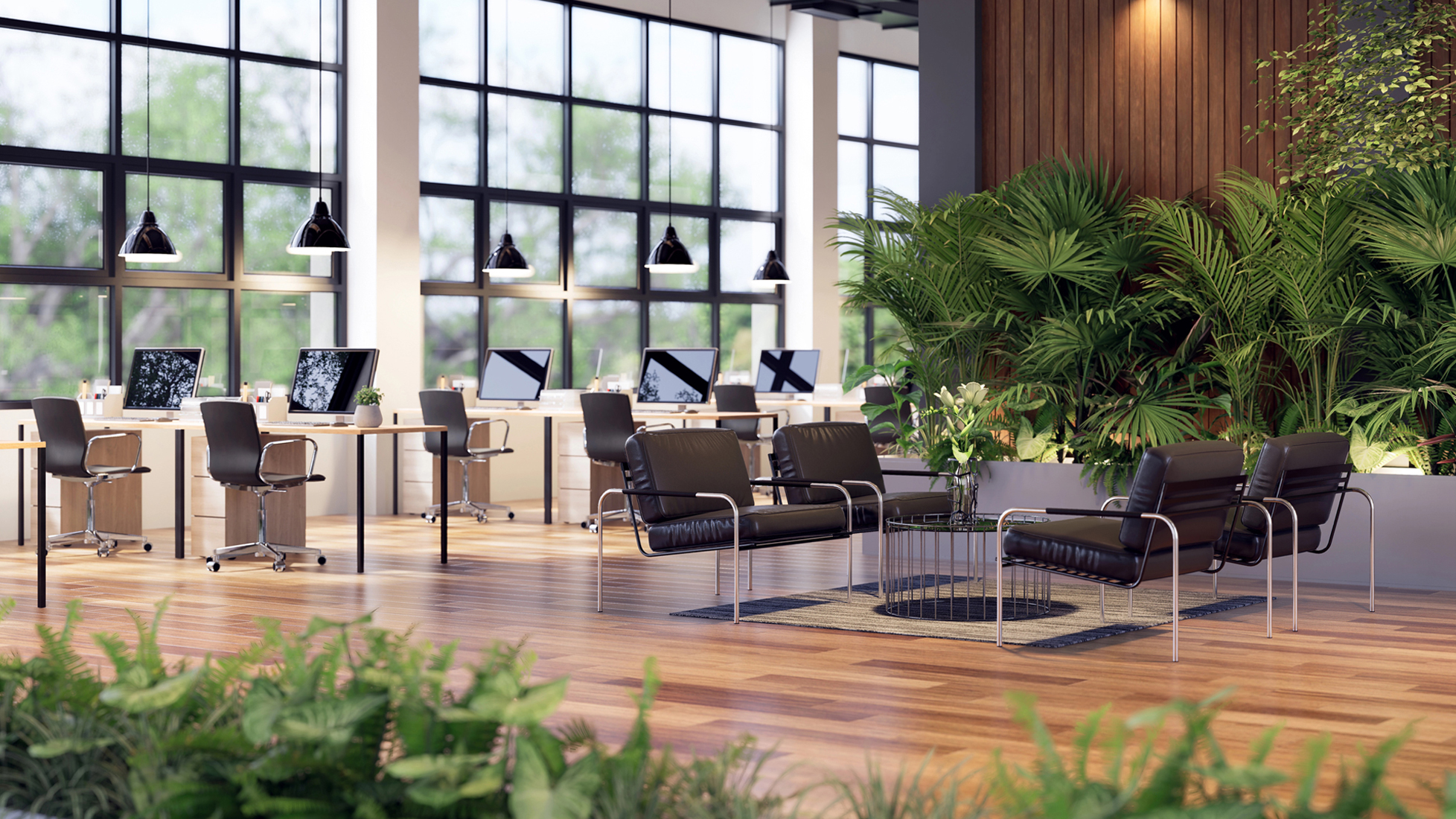
In previous articles we’ve talked about creating workspaces that work for everyone. Inclusive office design encompasses everyone and covers the full spectrum of the diverse and varied needs of all staff including their experience, ability, language, culture, gender, age and disabilities ensuring a more inclusive and productive workplace environment.
Benefits Of Inclusive Office Design
Accommodating sensory, cognitive and physical needs within an office space comes with a number of benefits including improved wellbeing, stronger company culture, better decision making, higher employee engagement, increased staff retention, increased profitability and enhanced company reputation and brand value. A few of these many benefits are outlined below.
Improved Health and Wellbeing
With inclusion comes improved health and wellbeing.
Bupa’s “Benefits of a culture of inclusion” states that “A culture of inclusion can benefit workplace health and wellbeing. Making sure everyone is treated equally is morally, the right thing to do. But it can also improve business performance.” Bupa goes onto say that “a workplace that encourages equality, diversity and inclusion can translate to success. The benefits are wide-reaching for personnel. You can keep employees happy and motivated and performing at their best (and keep them)… Inclusion will give an individual employee a sense of belonging and a voice. It helps them to feel that their individual skills and abilities are valued. While as a wider organisation, it can translate to a healthier work environment, with better outcomes and reduced absenteeism.”
The Head of Mental Wellbeing at Bupa Health Clinics, Naomi Humber says “An employee who feels psychologically safe, supported and valued as an individual will be able to perform at their best and thrive in their working environment. They are likely to be more engaged with their role and employer’s purpose. This can lead to greater productivity. Those who do not feel that they belong, or are unsupported within the workplace, are at increased risk of developing issues with their health and wellbeing. This in turn can adversely impact themselves and their company.”
Improved health and wellbeing through inclusion is also recognised by the Institute of Directors who state that “the wellbeing benefits [from inclusion] are far-reaching. Inclusion gives employees a sense of belonging and a voice. It helps them to feel that their skills and abilities are valued. While as a wider organisation, it can translate to a healthier work environment, with better outcomes and reduced absenteeism.”
Stronger Company Culture
Inclusive office design helps employees to feel a sense of belonging. That feeling of belonging is more likely to mean employees feel valued, part of a company’s culture and more loyal to that company.
The Shaw Trust says “the importance of diversity and inclusion in the workplace cannot be overstated. Embracing a diverse workforce and implementing inclusive hiring practices not only enriches your company culture but also drives innovation, productivity, and financial performance.”
Paradigm agrees. They state that “Prioritizing inclusive hiring practices is essential to building a vibrant, innovative workplace. Embracing diversity not only enriches company culture but also enhances problem-solving and creativity. By welcoming varied perspectives, you create an environment where everyone feels empowered, driving your organization toward greater success and unity.”
Better Decision Making
In research carried out by Forbes looking at 600 business decisions made by 200 different business teams in a wide variety of companies over two years it was found that: “inclusive teams make better business decisions up to 87% of the time, teams that follow an inclusive process make decisions 2X faster with 1/2 the meetings and decisions made and executed by diverse teams delivered 60% better results.”
Harvard Business School Professor Francesca Gino says “This research highlights the potential value of team diversity as a practical tool for architecting decision-making processes…our decisions get sidetracked by biases is now well established. While it is hard to change how our brains are wired, it’s possible to change the context of decisions by architecting the composition of decision-making teams for more diverse perspectives.”
“Why Diversity Matters In Decision Making” by Dimensional Insight states that “businesses with more diverse staffs excel at decision-making and outperform their peers financially.” They point to research which shows that “homogeneity may lull people into thinking they are making better decisions (because everyone agrees with each other), viewpoints that challenge each other sharpen the performance of teams.”
Increased Employee Engagement
The British Council state that inclusion boosts employee engagement. They say that “successful Diversity, Equity, and Inclusion (DEI) initiatives have a direct impact on employee engagement, increasing employer net promoter scores, retention and decreasing sick leave.” Statistics show a 50% reduction in turnover risk, 75% decrease in sick days and 167% in employer net promoter score when DEI initiatives are implemented.
In its diversity and inclusion article “Why is diversity important in the workplace?” Culture Amp say, “When employees feel seen, respected, and valued for their diverse experiences, they have higher job satisfaction – which can lead to better engagement, increased productivity, and greater loyalty to the company.” They go onto state that “today, diversity isn’t a buzzword, a marketing ploy, or a box to check. It’s fundamental for shaping a company culture that attracts top talent, increases employee engagement, and generates meaningful results.”
Higher Staff Recruitment and Retention
In their Employer Brand Report, Sensu asked a sample of 1,000 UK adults to tell them what was the most important factors that determined who they would and wouldn’t work for. They found that 31% of today’s graduates would choose to work for employers who proactively prioritise diversity and inclusion in their workforce.
In a Diversity Hiring survey Glassdoor found that more than 3 out of 4 job seekers and employees said that having a diverse workforce was “an important factor when evaluating companies and job offers.” They also discovered that having a diverse workforce was important to “underrepresented groups” with nearly one third saying they would not apply for a job at a company where there is a lack of diversity among its workforce.
Great Place To Work established that the benefits of a diverse and inclusive workplace include an “increased ability to recruit a diverse talent pool.” Their research on company culture found that “when employees trust that they, and their colleagues, will be treated fairly regardless of race, gender, sexual orientation or age, they are 9.8 times more likely to look forward to going to work, 6.3 times more likely to have pride in their work and 5.4 times more likely to want to stay a long time at their company.”
Increased Profitability
A study by McKinsey & Company on the diversity in the workplace, “Delivering through diversity”, based on an data set of more than 1,000 companies covering 12 countries found gender and ethnic diversity “are clearly correlated with profitability” with a “33 percent likelihood of outperformance on Earnings Before Interest and Taxes (EBIT) margin.”
Raconteur state that “Data proves companies with greater diversity outperform their more homogeneous counterparts” based on various studies. They point to analysis by Small Business Prices who found that “the top 25 UK companies in the FTSE 100 with a larger number of women on their board on average scored higher than those in the bottom 25 in all categories which include: culture and values, diversity and inclusion, work-life balance and career opportunities” and a McKinsey report which showed that “companies in the top quartile for ethnic diversity on executive teams were 36% more likely to have above average profitability in 2019 than companies in the bottom quartile, up from 33% in 2017.”
It’s clear that with inclusion and diversity comes many benefits. It’s therefore important to look at the barriers which prevent an inclusive workplace.
Inclusivity Barriers
Inclusivity barriers can be broken down into two categories: barriers that are visible and barriers that are hidden. When thinking about inclusive office design most people see the obvious barriers to inclusivity e.g. the need for lifts and ramps or ergonomic furniture to ensure accessibility for anyone who has a mobility issue or physical needs, however this can still leave many people excluded from office workspace. Below we look at the visible and the hidden inclusivity barriers and how office design and how we can address them.
Visible Inclusivity Barriers
Visible workplace inclusivity barriers are the structural, easy observed obstructions that prevent people with mobility issues from being able to move freely around a workspace like stairs, narrow doors, crowded areas without a clear path through the space.
Building
Buildings that don’t accommodate wheelchair users exclude those who have mobility issues. Buildings lacking ramps, lifts, automatic doors, where hallways and doorways are too narrow to let a wheelchair through and high counters make access problematic and inaccessible.
It’s therefore important to look at ways of making buildings accessible by designing access ramps, lifts and having automatic doors where possible. Wider hallways and doors, wheelchair-accessible layouts and bigger spaces between desks can also improve accessibility.
Furniture
A lack of adjustable, ergonomic furniture can hinder its use by anyone with varying body sizes or physical needs leading to discomfort and potentially causing physical injuries.
Ensuring workstations and other furniture can be adjusted to individual needs is important when it comes to inclusivity. Modular standing, height adjustable workstations and ergonomic chairs that can be adapted allow personalisation of workstations to meet specific physical needs. Desk mounted power sockets, adjustable monitor arms, cable management racks and accessible storage also play an important role and should be within comfortable reaching distance.
Signage
Clear signage in all areas will help staff with visual impairments and hearing disabilities find their way around an office more easily. Consider braille displays, high contrast visuals, large print, screen magnifiers, digital navigation aids, audio descriptions, voice activated, recognition systems and hearing assistive technology.
Layouts should also be as intuitive as possible to aid staff in navigating an office space.
Washrooms
Being able to access the washroom is essential for everyone. However, someone with disabilities may have additional requirements that need to be considered to allow them to easily enter toilet facilities. Businesses need to make reasonable adjustments so that anyone with a disability is not placed at a disadvantage.
Design standards for washrooms are set out in “Access to and use of buildings: Approved Document M” and BS 8300-1:2018 Design of an accessible and inclusive built environment. External environment – code of practice” (which covers over all aspects of accessible and inclusive built environment design). These documents provide design guidance on the layout, dimensions, fittings and circulation space required for an accessible washroom.
Some of the features of an accessible washroom include wide outward opening doors to allow for wheelchair access, wheelchair turning space, assistance alarm with pull cord, non-slip flooring, raised height with lateral transfer space, grab rails, accessible washbasins at appropriate heights with space underneath for wheelchair access and lever or sensor operated taps.
Where showers are part of the facilities, they should be of a non-slip wet room style with level access, fold down shower seat, grab rails and reachable light switch. Walls should be contrasting colours to aid visibility.
Kitchen
Like bathroom access workplace kitchens should also be accessible to everyone.
A few of the many requirements of an accessible workplace kitchen include accommodating wheelchairs by ensuring the space is clutter free and having enough space for wheelchairs to move about freely. Worktops should be easy to reach and have appropriate knee clearance underneath. Cupboards and appliances should also be within touching distance. Taps should be controlled by sensor or lever.
Parking
Having disabled parking bays to allow staff with disabilities to park close to a workplace building is important. The British Standards Institution (BSI) recommends that business premises should have a space for each of their disabled employees plus 5% of the total capacity for visitor parking and a further 4% for enlarged standard parking spaces. This should allow staff with disabilities with different types of vehicles and mobility equipment, who need to enter and exit their vehicles in different ways enough space to enter and exit safely.
The Equality Act 2010 also states that reasonable adjustment must be made for disabled employees and therefore disabled parking should be provided for any disabled employees who require it.
Hidden Inclusivity Barriers
Hidden workplace inclusivity barriers are barriers that are non-physical and which prevent staff who have sensory, cognitive, and neurodiverse requirements from being and feeling included within the workplace such as poor or harsh lighting, poor acoustics, a lack of private, quiet spaces or complex technology.
Acoustics
For anyone who has sensory problems or neurodivergent needs high levels of office noise can lead to sensory overload, significant distress, stress and anxiety, leading to mental health issues. It’s therefore important to tackle office noise as part of the design process.
This can be done in several ways, some of which include: the placement of workstations to reduce noise from travelling in a direct path; the use of acoustic screens, partitioning, dividers and panels can act as noise barriers, absorbing unwanted office noise and preventing it from being heard across office spaces.
Suspended and acoustic ceiling tiles or drop ceilings can also play a role in noise reduction, stopping echoing and the bouncing of noise around adjacent office areas.
The use of carpets can reduce ‘footfall’ noise as carpets soften and absorb sound. Soft furnishings are also a good way of absorbing office noise as are office plants which act as effective noise barriers as the plant’s leaves; branches and stems absorb, deflect and refract sound.
Lighting
Office lighting should be an office design priority, not an afterthought.
Office space lighting requirements can differ greatly between generations. In many cases older staff may prefer brighter, uniform lighting as visual field size, light sensitivity, colour discrimination and visual acuity all decrease with age, which results in the older generation requiring more light, in comparison to the younger generation, who often see overhead lighting as harsh and uninviting causing them to gravitate towards dimmer, warmer and layered lighting, such as desk lamps and natural lighting. Neurodivergent staff and those with visual impairments may also find bright, harsh, glaring light uncomfortable.
Natural light should be utilised wherever possible. Where natural light isn’t possible good quality artificial lighting that mimics natural light, provides good illumination and doesn’t cause glare where it’s installed is vital. If you use flat panels or recessed light fittings, it’s important to make sure that the beam isn’t too strongly focused downwards.
Provide areas with varied lighting choices or where the light level can be fully controlled. What is just right for one person may be too bright or not bright enough for someone else. Also consider the colour of the lighting used. Warm colours can provide a calming atmosphere; cooler colours can promote focus.
Temperature
Thermal comfort is important when it comes to inclusive office design. Males, females, older workers and neurodiverse staff all feel temperature differently.
The older generation may be more sensitive to cold due to having slightly lower body temperatures, less of an ability to regulate temperature and a slower metabolism. For neurodivergent staff temperature extremes can be a problem which can cause distraction and stress. However, studies have shown that thermal comfort may be more of a gender factor and have a larger impact on women as women require higher temperatures to feel comfortable and perform at their peak.
Being able to control the temperature of a workspace or having “custom temperatures” in different rooms (an idea supported by the WELL Building Standard) can make the difference between working comfortably and productively or being uncomfortable and distracted.
Workspaces
Staff with cognitive or sensory needs often find the noise in office spaces overwhelming. Where this is the case a quiet, low-stimulation area where staff can retreat to can provide much needed respite and allow them to continue working comfortably while performing efficiently and effectively. However, while privacy and quiet are vital for those staff who prefer to work alone, many neurodivergent staff like to come together to collaborate or socialise. It’s therefore important to offer different workspaces including private areas, collaborative spaces and quiet zones that can support different tasks, workstyles and requirements in terms of neurodivergent requirements.
Depending on your workforce’s cultural needs other spaces may also need to be considered such as prayer spaces.
It’s about finding the right balance between private, collaborative, quiet, breakout and other spaces, to allow staff to choose the setting that best suits their needs at any given time, for your specific staff’s needs.
Technology
Technology can act as a significant, hidden barrier to inclusivity. Technology should be a tool to enhance productivity, but it can exclude those who are disabled or those who have varying degrees of digital literacy.
Many workplace tools have poor user interfaces with low colour contrast or complex navigation which makes it harder for staff with visual or motor impairments to use. Many tools don’t work with assistive technologies such as screen readers making it difficult for visually impaired employees to interact with the software. Digital content and documents that don’t include alt text or have poor colour contrast can create barriers for staff with disabilities.
Incorporating technology that works with assistive technologies such as screen readers, screen magnifiers, digital navigation aids, speech to text software; voice activated, recognition systems and hearing assistive technology provides staff with the tools to allow them to access the information they need to do their work.
Standard keyboards and mice may not be suitable for staff with physical disabilities who require more specialised equipment like ergonomic keyboards, mice or trackballs which enable staff with reduced dexterity to fulfil their job role.
Biophilia
As human beings, we have an innate human tendency to seek connections with nature. Given this genetic disposition, working inside every day, upwards of 40 hours a week, can negatively impact our physical and mental health and wellbeing leading to higher stress levels, increased fatigue and lower morale especially those with neurodivergent or sensory needs.
Incorporating natural elements into the office, by bringing the outside, inside, by using elements such as wood, stone and fabrics like cotton along with plants and greenery can have a positive and calming impact on staff mental health, leading to a reduction in stress levels, increasing attention span, improving memory and learning, increasing creativity, and reducing presenteeism and absenteeism.
Plants and other elements from nature are not just aesthetic additions but functional tools that support diverse sensory, cognitive, and physical needs.
Colour
Colour can play a major psychological and emotional role, on a subconscious level, which can impact inclusivity. Colour psychology, the study of colour on human behaviour has been around for years and clearly shows that colour plays a vital role in how it affects us in our daily life. Having the right colour scheme can provide the right environment to provide office space that can soothe and have a calming effect, reducing overstimulation and anxiety, as an example, neurodivergent staff often need workspaces with soft, muted colours to minimise sensory overload.
Colour can be used to “zone” areas within an office space to reflect the purpose of the space e.g. a blue zone for quiet, focussed work; blue accents to help with concentration and productivity, greens to promote calm, reduce fatigue and boost staff wellbeing; neutral browns and beiges to create a warm atmosphere and help staff feel grounded. Yellow can lift spirits and confidence and is often linked to positive emotions like happiness, optimism and excitement.
Using high contrast colours within an office or building on steps, handrails, doors, and signage can also help with visual inclusivity by helping to improve navigation and mark hazards for staff with low vision, colour blindness, or cognitive impairments.
An inclusive office caters for everyone and creates an environment where employees feel comfortable and can perform at their best, bringing with it numerous benefits to both company and staff.
JBH Refurbishments, Experts In Inclusive Office Design and Refurbishment
JBH Refurbishments are a cat a and cat b fit out contractor and have over 30+ years experience in Kent and London inclusive office design, office refurbishments and fit outs. We can provide the right expertise for your Kent or London office refurbishment. We understand what’s required to carry out an office design and refurbishment to meet your business and staff needs.
From your brief, to putting together a project plan, to developing your office design and layout to delivering your office fit out JBH Refurbishments will provide the right expertise for your project providing peace of mind. You can contact us on 0333 207 0339 or via our contact page for a free on-site consultation.