

Office design is constantly developing and has changed significantly over the years. In a previous article we looked at how the offices of old with rigid, regimented office layouts have evolved into spaces that focus on providing staff with a workplace that promotes productivity and health and wellbeing. However, office design can go further. It can create a workspace that can cater for all staff beyond basic accessibility requirements and regardless of gender, age, physical, cognitive and sensory needs.
Many Workplaces Fall Short On Inclusion
Inclusivity in the office is important however may workplaces fall short when it comes to ensuring all staff feel included.
According to the Chartered Institute of Personnel and Development (CIPD) their ‘Inclusion at work 2022 report’ showed that “just 30% of employers say leaders in their organisation are completely committed to having a diverse workforce. And similarly, just 36% said that senior leaders are completely committed to having an inclusive workplace.” The CIPD findings are backed up by a YouGov poll carried out in 2023 which found that only 40% of UK employees say their current workplace values workplace diversity and inclusion.
A study of 2,000 employees by Mental Health First Aid England, in partnership with Henley Business School found that “There’s been a 25% drop in the number of people who feel they can bring their whole self to work, (66% in 2020, 41% in 2024).”
Outsail report that many employees feel their managers do not actively foster an inclusive environment resulting in employees leaving as they don’t feel included or valued.
In the Workmonitor Pulse Survey, as reported by the Financial Management magazine “39% of UK workers felt more isolated in the workplace than they did five years ago, with this sense of isolation being more pronounced amongst Millennials (45%) and Gen Z (37%).”
ActionAble 2025 state that the UK FTSE 100 falls short in disability inclusion with “just six FTSE 100 companies disclos[ing] data on senior leaders with disabilities” and “only 18 of the 100 FTSE 100 companies report[ing] the total number of employees with disabilities” despite the fact that around 25% of the UK population identify as having a disability and 40% of disabled individuals struggling to access services and products that meet their needs.
The Benefits of An Inclusive Workspace
With workplace inclusion comes a number of documented benefits including better decision making, increased employee engagement, increased profitability and increased staff retention.
Better Decision Making
In a study reported by People Management (CIPD) a direct link between diversity and better decision making was found with diverse teams 87% better at making decisions.
In the analysis of the decision making of around 600 business decisions over two years made by 200 different businesses a study by Forbes showed “a direct link between inclusive decision making and better business performance”. It was found that inclusive teams made better decisions 87% of the time, inclusive teams make decisions twice as fast and require half the number of meetings to get to a decision and decisions made and carried out by diverse reams result in 60% better results.
Aquent highlights that where businesses only recruit people who think alike, have the same perspectives and conform to the same prejudices you end up with people who are likely to come up with the same solutions and have the same blind spots. Aquent go onto say that diverse teams “have a better collective understanding of their clients or consumers, they bring a wider, more inclusive perspective and as a result there are fewer blind spots in their recommendations or approach which, in turn, lessens risk.”
The article “Why Diversity Matters In Decision Making” by Dimensional Insight points out that when everyone agrees with one another it can lull teams into thinking they’re making the right decisions however different viewpoints can challenge decision making and cause teams to rethink and reassess their decisions leading to better decision making. They point to a Harvard Business Review (HBR) article “Diverse Teams Feel Less Comfortable — and That’s Why They Perform Better” which emphasises the point that “Homogenous Teams Feel Easier — but Easy Is Bad for Performance”. The HBR article describes a 2009 study which looked at diverse and homogenous teams who were asked to solve a murder mystery. After naming a suspect the teams were asked to rate the discussion they had to identify the suspect. It was found that the “More diverse groups — those joined by someone from outside their own fraternity or sorority — judged the team interactions to be less effective than did groups joined by insiders. They were also less confident in their final decisions.” However, the results were diametrically opposed. “Adding an outsider versus an insider actually doubled their chance of arriving at the correct solution, from 29% to 60%. The work felt harder, but the outcomes were better.”
Increased Profitability
Global Newswire report that diverse companies earn 2.5 times higher cash flow per employee and inclusive teams are more productive by over 35%.
A Harvard Business Review (HBR) article “How and Where Diversity Drives Financial Performance” found that businesses with above average diversity numbers also had 19% higher innovation revenues and 9% higher Earnings Before Interest and Taxes (EBIT) margins.
According to McKinsey and Company’s Diversity Report which looked at data from 366 public companies across different industries in the United Kingdom, Canada, Latin America and the United States those businesses which ranked in the top quartile for racial and ethnic diversity; and gender diversity were 35% and 15% respectively more likely to have “financial returns above their respective national industry medians”. In the USA a linear relationship exists between racial and ethnic diversity of the senior-executive team and better financial performance. In the UK, of the data examined, greater gender diversity on the senior-executive team resulted in “the highest performance uplift”.
The Deloitte “The diversity and Inclusion revolution” report found that businesses with an inclusive culture are twice as likely to exceed financial targets, three times as likely to be high performing, six times more likely to be innovative and agile and eight times more likely to achieve better business outcomes.
Increased Employee Engagement
Research which explored the relationship between diversity practices, inclusion, trust and employee engagement at work found that “a high trust climate in an organisation provided a strong ‘underlying mechanism through which diversity practices transmit its positive effect on engagement’. Simply put, when diversity practices and trust co-exist in an organisation, it increases employee engagement.” The research also identified “that perceptions of diversity are only positively related to trust when employees also perceive high levels of inclusion. Therefore, to achieve an engaged workforce through this combination of ‘diversity and trust climate’, perceptions of inclusion are critical.”
In its article “Top benefits of diversity in the workplace” SAGE state that when an employee feels valued, seen and heard their morale and company loyalty will naturally increase which in turn results in a higher level of engagement. This viewpoint is also echoed by Culture Amp who state that “When employees feel seen, respected, and valued for their diverse experiences, they have higher job satisfaction – which can lead to better engagement, increased productivity, and greater loyalty to the company.”
The British Council state that statistics show a 50% reduction in turnover risk, 75% decrease in sick days and 167% in employer net promoter score when Diversity, Equity, and Inclusion (DEI) initiatives are implemented.
Increased Staff Recruitment and Retention
In a survey by Glassdoor 76% of job seekers and employees reported that a diverse workforce was an important factor when deciding job offers. The survey also found that this was particularly important to minority groups with 32% of saying they would not apply for a job at a company where there is a lack of diversity among its workforce.
62% of employees stated they would reject a job offer if a business didn’t support a diverse workforce. This finding from Monster’s Future of Work report which surveyed 3,000 HR professionals also found that 86% of employees consider inclusion and diversity to be critical to employment and 45% of employers believing that diversity is key to retaining staff and attracting new employees.
Great Place To Work Insights research on company culture show that when employees feel they will be treated equally and fairly regardless of their gender, race or age they are more likely to look forward to going to work, have pride in their work and want to stay a long time at their company.
Better Health and Wellbeing Outcomes
CIPD’s ‘Inclusion at work 2022 report’ says that “The importance of inclusion and diversity in the workforce can be underestimated, but research into the field continually reveals that a high level of adoption is associated not only with greater productivity and performance, but innovation, talent attraction, employee retention and overall workforce wellbeing.”
AbilityNet, a UK charity which provides specialist services and impartial support to create a digital world accessible to all says that “A diverse workplace naturally creates a more inclusive and understanding environment. When people from different backgrounds come together, there’s a higher likelihood that different mental health needs are recognised and accommodated. This can lead to the creation of tailored mental health support initiatives that resonate with a broader range of employees. Additionally, inclusivity in the workplace can reduce the stigma around mental health by encouraging open dialogue and promoting awareness…Employees who feel that their differences are valued and respected are more likely to feel secure, leading to reduced stress levels and better overall mental health.”
Bupa state that “A culture of inclusion can benefit workplace health and wellbeing.” They go onto say that inclusion gives employees a sense that they belong and helps them to feel valued. It can also result in a healthier workplace environment with better health outcomes and reduced absenteeism.
Naomi Humber, Head of Mental Wellbeing at Bupa Health Clinics says “An employee who feels psychologically safe, supported and valued as an individual will be able to perform at their best and thrive in their working environment. They are likely to be more engaged with their role and employer’s purpose. This can lead to greater productivity. Those who do not feel that they belong, or are unsupported within the workplace, are at increased risk of developing issues with their health and wellbeing. This in turn can adversely impact themselves and their company.”
How To Make Your Office Design Inclusive
Clearly providing equal access to opportunities and resources for all staff is vital in today’s office space. So, it’s important to ensure that inclusivity is built into your next office design. Below are a few of the many ways to recognise and include diverse employee needs to ensure an office is designed for wide range of physical, cognitive and sensory requirements; that flexibility is prioritised to allow for different work styles and supportive spaces are designed to allow for privacy and teamwork, quiet and collaboration.
Ensuring Accessibility
It’s important to ensure that your office is designed to be accessible to everyone. Accessibility can often be overlooked when it comes to office design but it should be carefully considered and form part of the early design phase.
Designing intuitive layouts can make it easier for staff to find their way around an office especially where the office space is large or spread over multiple floors. Having departments and teams situated in the same areas can make them easier to find.
Signposting and clear signage can also ensure staff know where to go. High contrast visuals, large print, braille displays, screen magnifiers and audio descriptions can help staff with hearing and visual disabilities find their way more easily around an office space.
The office design should also include accessible routes throughout the office by designing wider doorways and corridors, automatic doors, access ramps and railings or lifts, wheelchair-accessible layouts and wider spaces between desks.
Accessibility can also be achieved by offering a variety of modular workstations that can be adjusted to individual needs and by having ergonomic chairs, standing, height adjustable desks; desk mounted sockets, adjustable monitor arms and cable management racks.
Providing accessible storage, height adjustable kitchen sink units and work tops, grab rails in washrooms, lower washroom basins and accessible parking bays close to the building entrance are also important.
Making Accommodations For Sensory, Cognitive, and Neurodiverse Requirements
Accommodations for sensory, cognitive, and neurodiverse requirements as well as physical disabilities also need to be considered.
Lighting
Natural light should be utilised wherever possible. Where natural light isn’t possible good quality artificial lighting that mimics natural light, provides good illumination and doesn’t cause glare where it’s installed is vital. Provide areas with varied lighting or where the light level can be fully controlled. Also consider the colour of the lighting used. Warm colours can provide a calming atmosphere; cooler colours can promote focus.
Noise
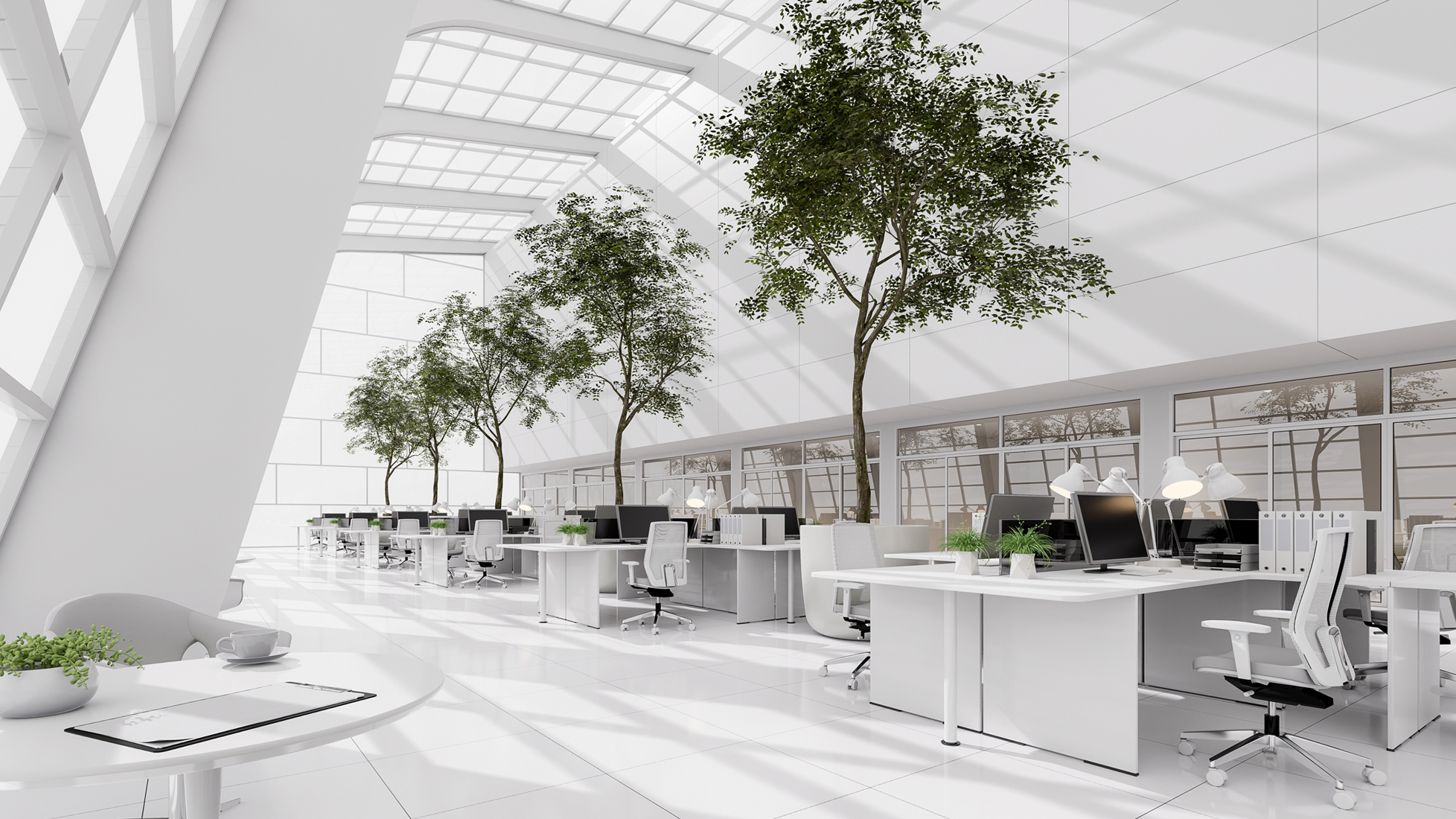
Reducing the impact of noise throughout the office space is also a factor that should be carefully considered and mitigated as much as possible by using sound absorbing materials, acoustic screens, partitioning, dividers and panels. Plants can also be utilised to reduce office noise as they can act as a barrier, as leaves, branches and stems absorb, deflect and refract sound.
Installing acoustic office pods can help to isolate and dampen noise in an office space with the added advantage of providing additional meeting spaces. Suspended or drop ceilings are also effective at absorbing noise.
Footfall noise can be reduced or mitigated by having carpet on floors to soften and absorb sounds, rather than tiles as carpets, making for a quieter environment.
Private spaces or quiet zones can also provide areas to get away from the office noise when staff need somewhere to work in private or when main office noise may become too much, causing overstimulation which can lead to anxiety and stress.
Flexible and Varied Workspaces
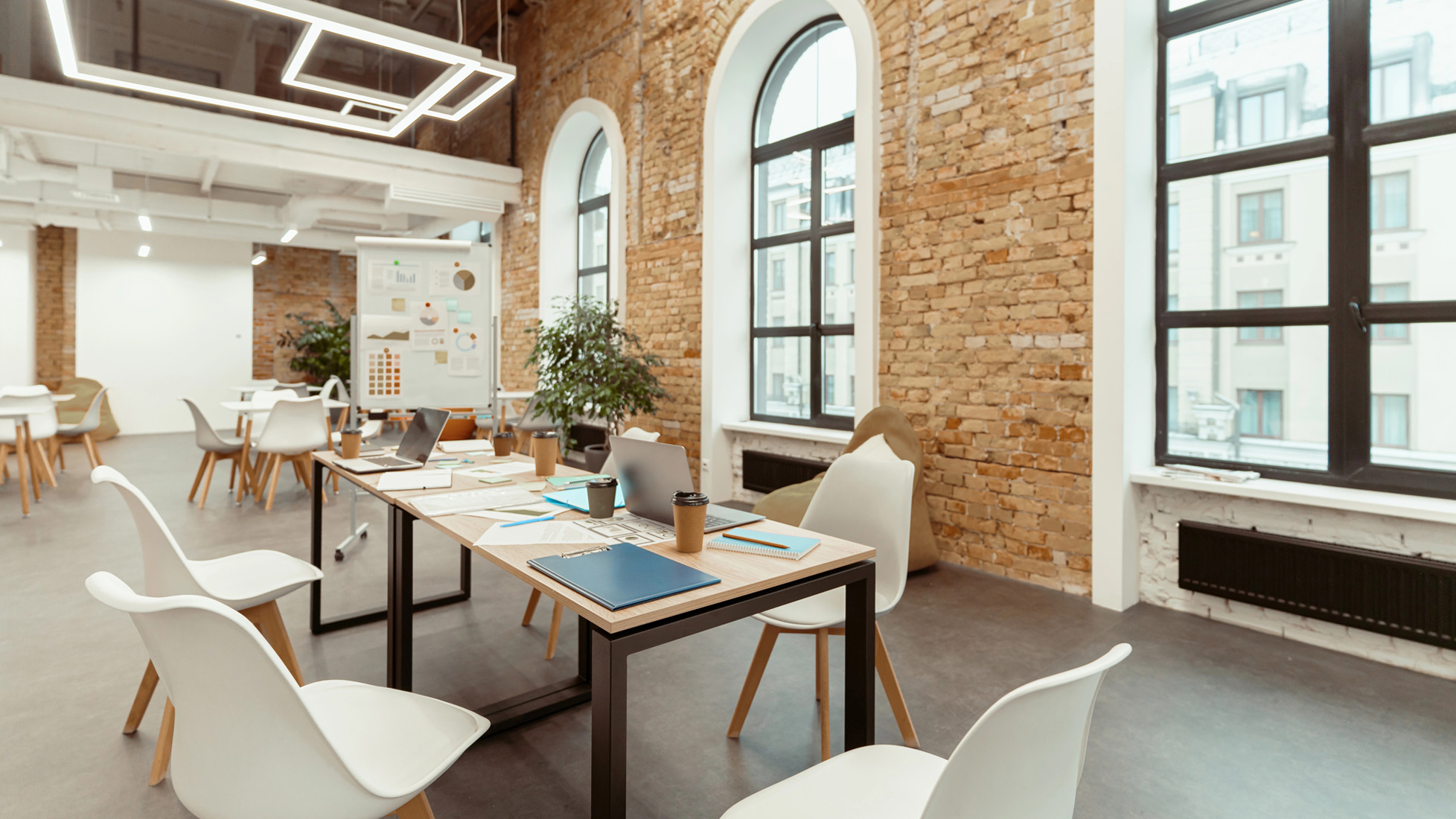
A one size fits all layout and office space approach isn’t possible if inclusivity is the goal. Effective office space for staff with cognitive and sensory needs is one that provides a space that allows for variety, choice and control over the workspace. The ideal office will allow the individual to choose from areas that allow stimulation, or minimise noise or allow them to work privately or in collaboration. Offering flexible and varied workspaces including private areas, collaborative spaces and quiet zones will help to support different tasks, workstyles and requirements in terms of neurodivergent needs.
Different spaces can be setup to deliver sensory zoning, allowing different zones to cater to different needs. It’s important to find the right balance between private, collaborative, quiet and breakout spaces within an office.
Having dedicated private spaces and quiet zones that staff can use can help to address perceived privacy issues and limit distractions is important. Where noise can become overwhelming for some staff or just a distraction for others, a quiet area where staff can retreat to can provide much needed respite and allow them to continue working comfortably while performing efficiently and effectively
While privacy and quiet are important so too are spaces that allow staff to come together to collaborate. Collaborative or “activity” zones can provide areas for teamwork and more high energy work where groups of people can come together to meet, brainstorm, discuss ideas or to work collaboratively on project tasks. Dedicating space away from the main office and private and quiet areas and installing acoustic panelling and soft furnishings can help to minimise noise.
Breakout areas can fulfil a need somewhere between collaborative spaces and private and quiet zones. They can be simple, comfortable seating meeting areas, games zones, a tea point or kitchen, a wellness room or a gym of fitness area where staff can relax, take a break and recharge or come together to gather and socialise
Technology Integration
Technology can be used to enhance accessibility and inclusivity. Incorporating assistive technologies such as screen readers, screen magnifiers, digital navigation aids, speech to text software, voice activated, recognition systems and hearing assistive technology can provide staff with the tools to allow them to access the information they’ll need to do their work.
Devices that reduce physical strain or that allow for reduced dexterity like specialised ergonomic keyboards, mice or trackballs can also play a role in an inclusive office environment.
Inclusivity goes further than ensuring your office is accessible, it. Designing an office for accessibility and inclusion ensures that an office space caters for everyone and creates an environment where employees feel comfortable, focus and perform at their best.
JBH Refurbishments, Experts In Office Design and Refurbishment
JBH Refurbishments are a cat a and cat b fit out contractor and have over 30+ years experience in Kent and London office design, office refurbishments and fit outs. We can provide the right expertise for your Kent or London office refurbishment. We understand what’s required to carry out an office design and refurbishment that is inclusive.
From your brief, to putting together a project plan, to developing your office design and layout to delivering your office fit out JBH Refurbishments will provide the right expertise for your project providing peace of mind. You can contact us on 0333 207 0339 or via our contact page today for a free on-site consultation.