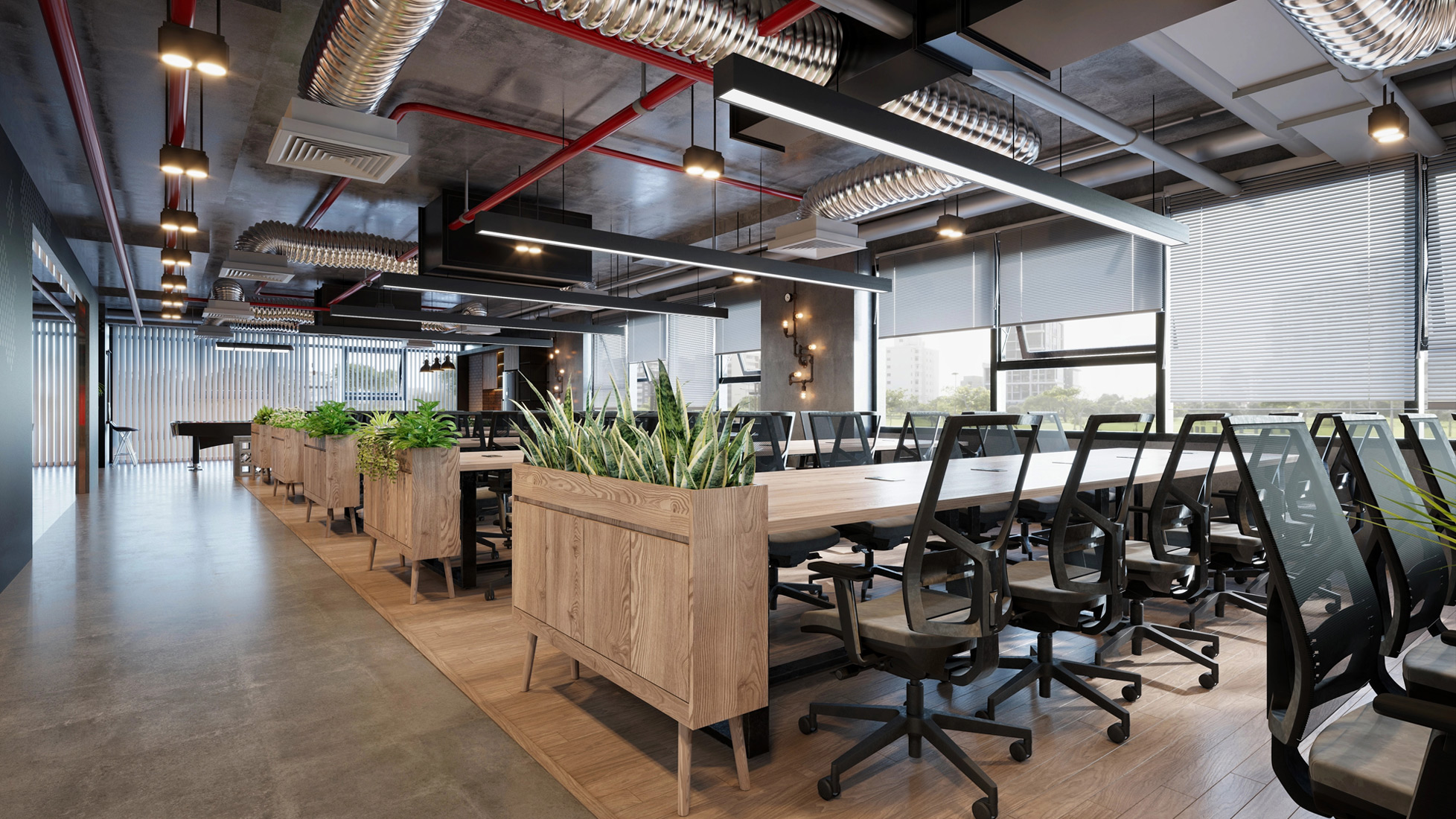
Deciding to go ahead with an office refurbishment is a major decision for any business and one of the first questions asked is usually “what will the cost be?” Unfortunately, there isn’t a one size fits all cost for refurbishment projects.
The final cost will depend on a number of factors including location, access, building condition, the size of the office (sq ft), the type of office refurbishment and the finish required. Understanding what drives office refurbishment costs can help businesses make an informed decision about how to properly scope out a project, the likely budget required and how to avoid scope and budget overrun.
What Factors Affect Office Refurbishment Costs?
There are a number of factors that can impact the cost of an office refurbishment some of which are outlined below:
Location, Location, Location
Location can be a primary driver when it comes to the cost of an office refurbishment. In general terms, office space can be an expensive commodity in city centres and major cities, especially in prime locations like London, when compared to regional locations.
High demand for quality London office space pushes up prices as London is a prestigious,global business hub and prime location and businesses will pay a premium to be close to clients and competitors.
Age Of The Building
The age of a building can be a consideration in the cost of an office refurbishment.
Older buildings, often found in city centres, can be impacted by conservation considerations which require balancing the preservation of the building’s character with any refurbishment changes. They also often require a more extensive refurbishment to meet ESG (Environmental, Social, and Governance) building regulations and safety standards to bring them up to standard and on-going maintenance costs to keep them at that standard, whereas newer buildings may only require a softer, simpler, more cosmetic refurbishment.
Infrastructure Condition
The condition of an office’s existing infrastructure can be a major cost factor. Every project is different and the condition of each building and office space will also be different.
Buildings that have been kept in good condition are likely to cost less to refurbish. Where an existing office and its infrastructure have been well maintained the electrical systems, Heating, Ventilation and Air Conditioning (HVAC), plumbing and lifts may not need any or much updating.
If preparative work is required to bring the building up to a standard to allow the project to begin e.g. asbestos removal, repairing water leaks or carrying out structural repairs, costs can significantly increase. Cost will also be impacted where any electrical and mechanical systems haven’t been maintained, are outdated and need upgrading, or need replacing.
Any unexpected works that aren’t found during project discovery can cause project delays and additional costs so it’s vitally important to carry out the required building surveys to avoid costly surprises.
Project Timelines
The speed at which an office refurbishment needs to be completed can impact the cost.
A “fast-tracked” project can require increased staffing to help speed up the time taken to complete the work or it can mean contractors having to work overtime, through evenings and weekends to meet deadlines. Tasks that would normally be done sequentially may have to be done at the same time which can require more complex project management. Building materials may also need to be expedited especially where custom design or specialist finishes are required, which can lead to increased completion and delivery fees.
On the other hand, a project where planning isn’t rushed, and which allows for more detailed planning with contingencies built in, allows for more efficient staffing and better cost control. A carefully planned project is also more likely to notice potential issues and be able to address them ahead of time so there is no waste and no surprises.
Building Access
All office refurbishments requires building access in order for contractors to gain entry, load and move building materials and remove debris. The ease with which this can be done dictates the cost of the project. Where there’s restricted access e.g. in busy city centres there may be parking restrictions or a limitation on deliveries to slots that avoid peak traffic times such as early morning or night time slots, this can cause project delays or increased timelines.
In older buildings or city centre buildings where space is at a premium and can be tight, moving large building materials to upper floors can require specialised lifting equipment. The capacity of existing loading docks and service lifts can also restrict the size of any materials and equipment that can be moved to the office areas to be refurbished.
Where an office is occupied access control will be required to ensure staff are kept separate from construction hazards by installing barriers and controlling any dust and noise generated. In leased offices landlords may decide to restrict periods during the day when contractors can access loading docks and service lifts to minimise disruption to anyone already occupying office space. Access constraints may also come into force if there is likely to be any high noise activities for extended periods.
Each limitation or restriction to access adds another layer of complexity and cost to a project.
Office Size
The size of the office space to be refurbished is probably the most obvious project cost.
In general terms larger square footage spaces cost more although larger scale projects can benefit from economies of scale as larger scale labour and material costs can be more easily negotiated.
Larger size offices often need more partitioning, flooring and ceilings as well as a higher budget for furniture to accommodate more staff.
However, smaller spaces don’t always guarantee lower costs. In some circumstances smaller spaces require a more complex design, layout and custom or bespoke solutions to maximise the use of the space compared to larger, less complex spaces.
Empty Or Occupied?
An office refurbishment generally costs less when an office is empty during the refurbishment as an empty office allows contractors full, unrestricted access to the office space enabling them to be able to work without being interrupted and without having to work around or protect office staff and equipment.
Where staff are present security, dust and noise barriers have to be used to protect staff and office equipment which in turn may slow project progress and increase the overall project timelines. It may also necessitate phased working where contractors are limited in the hours they can work or may have to work in phases to complete the project. Where the project requires work that is likely to be noisy refurbishment work may be restricted to nights or weekends. The complexity of having to manage an occupied office space can add 5- 15% of the total budget to the cost of managing the project.
Refurbishment Or Fit Out?
Office projects come in all shapes and sizes ranging from simple cosmetic updates to full structural and layout modifications.
For many businesses it’s simply a case of making surface level, cosmetic alterations. This can include a fresh coat of paint to apply a new colour scheme, painting an accent wall to provide focus, applying wallpaper or murals or graffiti to add interest or adding frosted film to glass partitioning to provide privacy. Or it may involve updating the office’s soft furnishings where a business is looking to refresh the office space when it’s starting to look old or worn.
Other businesses may be looking to go well beyond aesthetics and depending on the scope a project may go beyond a refurbishment to become a Cat A or Cat B fit out.
A Cat A fit out involves preparing an office space for occupation by delivering the essential elements and basic infrastructure required to make the space habitable. This can include some or all of the following: essential wiring, power and basic lighting fixtures; basic air conditioning and ventilation, fire detection system including smoke detectors, fire alarms and sprinklers (depending on office space size), suspended or raised ceilings, basic flooring finished to an industrial standard, walls ready for decoration, toilet, washroom and shower facilities and a general reception area.
A Cat B fit out goes further, to fully tailor the space to meet a business’s needs and can include specialised lighting, air conditioning, heating and ventilation solutions; IT infrastructure and installation including video conferencing and mobile working facilities, smart building technology (automated lighting, heating, ventilation and air conditioning controls) and security systems; floor finishes including high quality carpet and wood, partitioning to provide the designed office layout including private office space, meeting rooms, breakout spaces, kitchen and reception area; fitted kitchen and tea point areas or dining facilities and any other individual facilities such as showers, gym or relaxation areas.
As the scope of the office refurbishment or fit out increases so do the costs.
Technology Requirements
Low technology office spaces will cost less than those requiring high levels of technology or customised technology solutions.
Technology requirements will vary depending on a business’s needs. Where a business is looking to refurbish its office space to allow for hybrid working maintaining good communication and collaboration with staff inside and outside the office and reliable internet and appropriate video conferencing technology will be vitally important. Booking systems for workspace, meeting room and collaboration areas will also be essential.
Those businesses looking to make their office space sustainable will require technology that can monitor and control office lights through motion and light sensors which can turn lights on or off based on occupancy or ambient light levels; and control the air quality, humidity and temperature through heating, ventilation and air conditioning to adjust office temperatures as required or send an alert if temperatures approach freezing, to prevent burst pipes. Water usage can also be monitored using sensors and smart meters to provide real-time data and detect leaks.
Where noise maybe a problem such as in open plan office spaces advanced audio solutions with noise cancelling technology can mask the sound and reduce sound leakage by providing uniform, engineered sound coverage across an entire office to help to reduce noise levels and provide a quieter working environment.
Where security is a priority, technology can deliver biometric security systems including access control replacing traditional keys with key fobs, key cards, fingerprint, or facial recognition; visitor management including guest registration and badge printing; video surveillance to identify people or vehicles and smart sensors or alarms to detect motion and open windows or doors.
Layout and Configuration
An office refurbishment allows a company to look at what layouts and configurations will work best for its employees, to match working practices and styles and provide the right type of spaces for privacy, collaboration, meeting, and breakout.
Layouts can range from open plan to activity based working zones, hot desking, agile working, collaboration, privacy pods or rooms to breakout spaces.
Each type of layout comes with different costs and depends on the requirement for building materials, and occupancy density levels, along with the degree of complexity.
Open plan offices tend to require fewer building materials such as partitioning. They also tend to have higher staff densities which lowers the cost of square footage per person. In comparison private offices spaces are more expensive as they require more building materials and have lower densities.
Activity based working requires the office space to be zoned by activity to provide areas for quiet work, collaborative areas for teamwork, and spaces that allow staff to socialise or take a break. This type of layout requires designing adequate space for each type of activity but money can be saved by maximising the use of the office space.
More flexible layouts and configurations which combine open plan with collaborative zones and quiet rooms and spaces can be designed to maximise space efficiency but must take into account how they can be reconfigured on demand to meet changing business needs which may result in more space being used depending on how the layout is reconfigured.
Complexity of Design
The complexity of an office design can mean higher refurbishment costs. As office designs move away from more simple layouts to more intricate, complex, partitioned, activity based, agile working or hybrid working layouts, the more complex the design and the refurbishment. Designs that require bespoke elements and structural changes require modifications to a building’s footprint which in turn increases construction time and costs.
Where the building’s office space is irregularly shaped, it can mean having to order custom designed materials and products or have a carpenter carry out custom joinery, rather than being able to use standard size, off the shelf products . All of which can make the installation more difficult too.
Projects which require complicated IT infrastructure, advanced lighting, heating, ventilation and air conditioning solutions and smart building systems will also increase the overall project cost.
Finish Required
The chosen finish of an office refurbishment can significantly impact the cost of the project. The higher the specification of materials, the more bespoke the materials used and material durability, the more expensive the refurbishment will end up being.
If you want your office space to have specialised lighting, premium quality flooring, high-end wall coverings, custom partitioning, higher quality, custom furniture, or more luxurious fabrics then this will drive up the cost when compared to more budget friendly “off-the-shelf” finishes.
However, it’s worth noting that initial higher spending may save you money in the long term as more durable, better-quality products are more likely to last longer and will not need to be replaced as quickly as more cheaper options.
If you also budget for options that are more sustainability focused and which monitor and collect data about where energy, water, and consumables are being used within your office space such as tracking and controlling out of office lighting and ensuring heating, ventilation and air conditioning use the minimum energy to achieve the maximum performance cost savings can be made.
Certification
Many businesses want their office refurbishment to meet certain certifications. The most common of which are BREEAM, SKA Rating, WELL and NABERS UK.
BREEAM refurbishment and fit out standards “provide a framework to deliver projects to a high performing and sustainable standard, support commercial success, and create positive environmental and social impact.” BREEAM covers ten main categories including waste, energy, water, and wellbeing, providing an assessment of the project’s sustainability performance.
A SKA rating “helps landlords and tenants assess fit-out projects against a set of sustainability good practice criteria” and offers Bronze, Silver, or Gold ratings based on over 100 “good practice” measures, such as energy, materials, and waste.
The WELL Building Standard is a performance-based certification system administered by the International WELL Building Institute (IWBI) which prioritises occupant health and wellbeing in design and construction by focussing “on improving human health and well-being through built environment design, operations, and behaviours. It covers ten core concepts—Air, Water, Nourishment, Light, Movement, Thermal Comfort, Sound, Materials, Mind, and Community—to create healthier, more productive workspaces.”
NABERS UK is a “performance-based rating system that measures actual operational energy efficiency, using a 1-6 star scale. Launched in 2020 by CIBSE and overseen by the Better Buildings Partnership, it includes “Energy for Offices” for existing buildings… to help reduce operating costs and bridge the performance gap.”
The higher the certification of an office refurbishment the higher the project costs.
Avoiding Budget Creep
It’s all too easy for a refurbishment project’s budget to overrun and get out of control. Its therefore important to consider partnering with a refurbishment and fit out specialist who will be able to bring with them a wealth of knowledge from their years of experience of carrying out office fit outs and refurbishments.
Your office refurbishment partner will have access to information on the latest innovations in design, development, and technology. They’ll know which products will be long lasting and will work for your refurbishment and they’ll have a list of suppliers they know and trust who can provide the right materials needed for your project, and which are reasonably priced. They’ll also fully understand lead times and know when to order the supplies required to ensure materials are delivered in a timely fashion to meet project deadlines. All of which can help to ensure costs are kept within budget and the project is kept on track.
JBH Refurbishments, Experts In Generational Office Design and Refurbishment
JBH Refurbishments are a cat a and cat b fit out contractor and have over 30+ years experience in Kent and London inclusive office design, office refurbishments and fit outs. We can provide the right expertise for your Kent or London office refurbishment. We understand what’s required to carry out an office design and refurbishment to meet your business and staff needs.
From your brief, to putting together a project plan, to developing your office design and layout to delivering your office fit out JBH Refurbishments will provide the right expertise for your project providing peace of mind. You can contact us on 0333 207 0339 or via our contact page for a free on-site consultation.