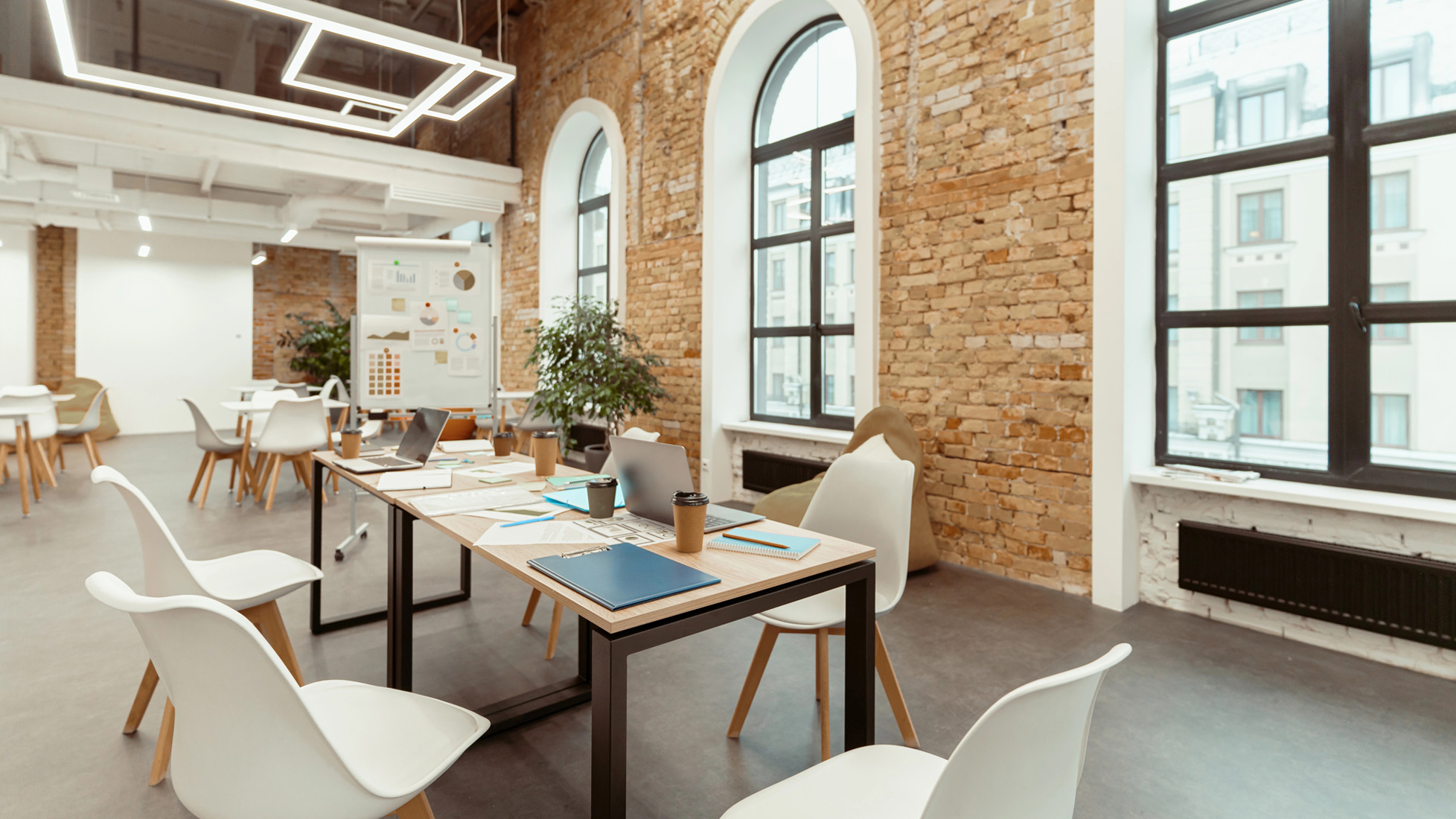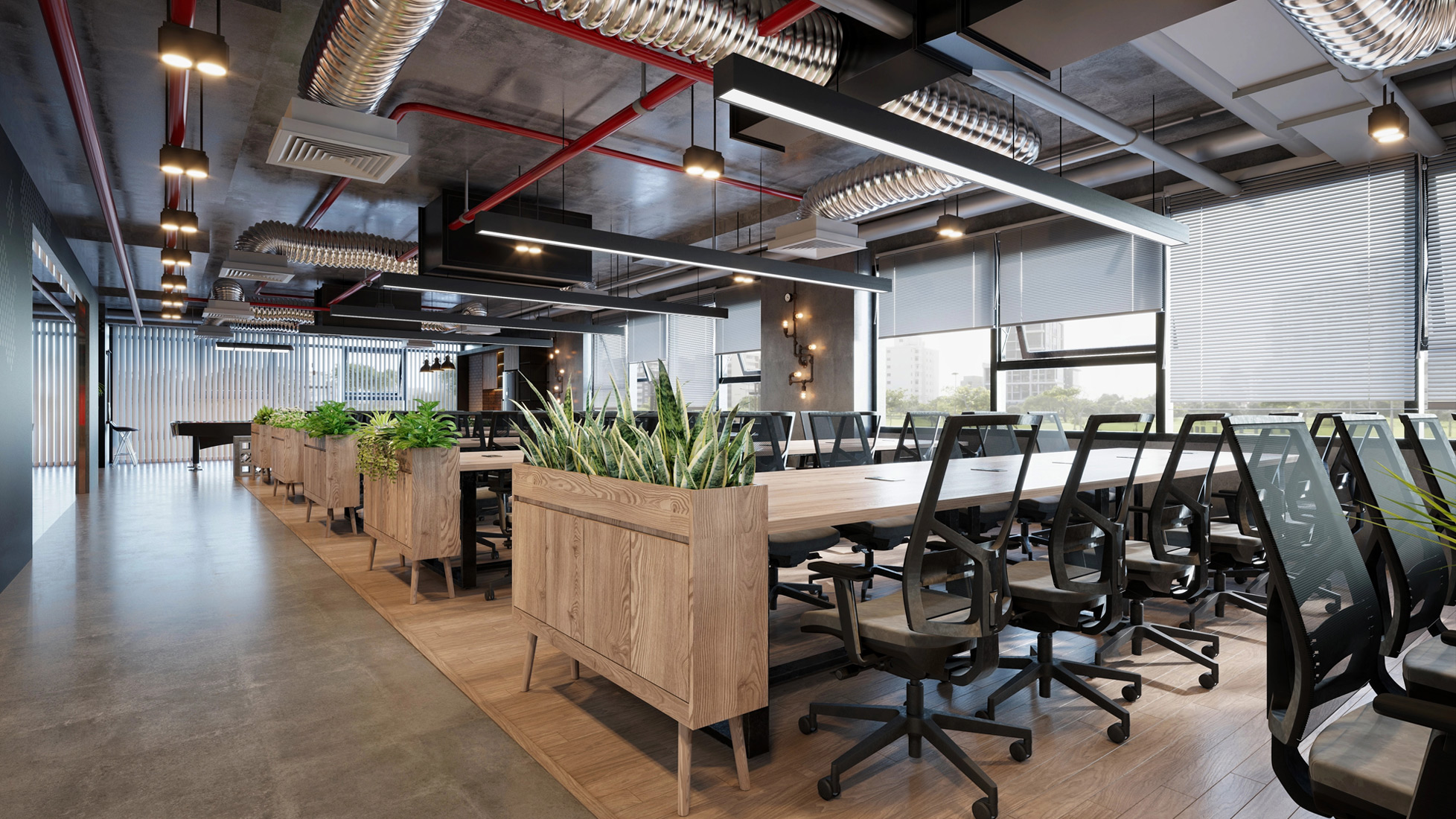


When it comes to designing an office space there are a few essential elements that every Kent and London business should consider incorporating into their office design. These elements “set the stage” and foundations for ensuring that an office is designed to promote productivity, creativity and staff health and wellbeing. They are:
Workspaces
Where space allows, having a range of varied workspaces or zones, from private office space or office pods to collaborative areas and meeting rooms is important as it allows staff to choose how and where they work best. This type of working is termed Activity Based Working (ABW).
Different workspaces can provide the perfect working environment for different work tasks including quiet and collaborative work. We also know from studies that having different workspaces to meet different needs comes with a variety of staff and business benefits e.g. in one study, the Municipality of Venlo decided to bring together its municipal teams, nearly 1,000 employees, who were working across multiple locations and offices using ABW to incorporate all the staff into one location, the new City Hall. The result was a 6,000m² reduction in footprint, a 33% reduction in energy consumption, a 33% reduction of CO₂, employee satisfaction rose by 90%, sick leave was significantly reduced, and staff collaboration was strengthened.
According to Gensler’s 2025 “Global Workplace” survey from over 16,000 office workers across 15 countries and 10 industries “Today’s workforce is demanding more autonomy over how they work. Employees with a high degree of choice in where and how they work are 2.5x more likely to say their workplace supports both individual and team productivity, and nearly 3x more likely to consider their office a great place to work. Spaces that provide access to private areas, flexible environments, and the ability to control lighting and noise levels are leading the way.”
When the UK National Grid moved to ABW the “Outcomes were very positive.” They saw a direct impact on staff performance. As staff gained back 5% in productive time due to improved access to meeting spaces, this result was an 8% improvement in staff performance, equivalent to a £20 million of increased productivity per year. Annual operating costs were also reduced by £8-£10 million. Equally importantly staff comfort and satisfaction levels increased by 8%.
Japanese office furniture company Itoki Global carried out an employee survey in 2017 having moved to ABW and found that 84% of workers reported improved productivity when compared to 76% in 2014.
The 360o Steelcase Global report looking at “Engagement and the Global Workplace” found that “a distinguishing characteristic of engaged employees is that they have a greater degree of control over where and how they work, including access to privacy when they need it. They are empowered, both by organizational decisions and the spaces made available to them within their workplace, to make choices about where and how they work. This means they can manage their need for privacy so they can concentrate easily and work with teams without disruptions.”
ABW spaces are also more conducive and accessible to a multigenerational and neurodivergent workforce.
Breakout
Breakout areas, which allow staff to break from work, take some downtime, socialise with colleagues or simply to take a moment switch off from work for a few minutes, are now a crucial part of office design.
The importance of taking regular breaks at work is well documented. It may not be as obvious how short breaks, even micro breaks, could have any sort of impact when compared to e.g. a two-week holiday, research has shown that taking even a short break from work during the day can provide major benefits. Some of those many benefits include preventing decision fatigue, improving attention and concentration, and boosting creativity and productivity. We all know that we can become tired and “seeing clearly” can become more difficult the longer we are focussed on one task. Walking away and giving the brain a chance to refresh and replenish can be extremely powerful.
The actual act of taking a break also means moving away from one area of an office to a different area. Movement is essential for physical health. Sitting for prolonged periods of time can lead to various health problems including type 2 diabetes and heart disease. So, taking a break fulfils more than just one purpose.
Flexibility
Building in flexibility allows any workspace to be transformed as and when required. Flexible office spaces enable businesses to be agile and easily adapt as their needs evolve. Whether it’s changing work processes, changing projects and teams or an expanding workforce how flexibly an office is designed will dictate how quickly a business can reconfigure its workspace to meet changing requirements.
In order to be flexible an office must be designed so that spaces can be multi-functional. Having that adaptability built in means any space within the office can be adapted to meet new needs, even temporary ones, where changes can be reverted as quickly as they have previously been implemented.
The use of folding, moveable partitions and walls, and sliding doors alongside modular, flexible, and adaptable furniture can provide a perfect solution to making layout changes on the fly to meet new business demands and staff needs.
Ergonomics
Ergonomics, the design of furniture, tools, and equipment that fits the human body, maximizing comfort, safety, and efficiency while minimizing discomfort or injury, is often overlooked but plays a vital role in the ideal office design.
Where ergonomics aren’t considered, it can lead to a number of health issues including musculoskeletal (MSK) disorders which affect the muscles, nerves, tendons, joints and soft tissues, such as carpal tunnel syndrome, tendonitis/rotator cuff syndrome, lower back pain, tension neck syndrome, trigger finger and tennis elbow, all of which can be debilitating.
In its “Working days lost in Great Britain” statistics, the UK Health and Safety Executive found that “musculoskeletal disorders accounted for the majority of days lost due to work-related ill health in 2024/25” with a figure of 7.1 million and “On average, each person suffering took around 16.4 days off work… with 14.0 days for musculoskeletal disorders.”
NKC Health explains “When your workspace is ergonomically designed, it reduces strain on muscles and joints. This helps prevent work-related injuries, boost productivity and makes your job easier on your body.” They go onto say that “Adopting an ergonomically friendly workspace isn’t just about preventing pain; it’s also about enhancing performance and longevity. Comfort in the workspace allows for optimal work performance. Here’s how improving ergonomics can benefit you: fewer injuries, less fatigue, increased focus, and better mental health.”
According to McClure Ergonomics Consultancy “A well-designed workspace allows for good posture, fewer repetitive motions, better heights and reaches, less exertion, reduced awkward postures and high-force requirements, and more efficiency. Companies that use ergonomic equipment and workspaces find that employees can work at a faster pace, make fewer errors, are more positive, and have higher energy levels.”
A well-designed office which takes ergonomics into account will ensure staff have a space that is comfortable, reduces strain and prevents musculoskeletal disorders.
Movement
Movement has been shown to be beneficial in a number of ways. Regular physical activity results in a lower risk of coronary heart disease and stroke, type 2 diabetes and osteoarthritis.
Mental health can also benefit from physical activity. Studies have shown that “Exercise can increase the production of endorphins, which are neurotransmitters associated with a positive mood and feelings of well-being. Exercise improves sleep, reduces stress and anxiety, and enhances self-esteem and social support. The implications of exercise as a treatment for depression are significant because depression is a common and debilitating mental health condition.”
Work performance can also benefit from movement. The NHS’s Transformational Trust states “Physical activity has been shown to naturally relieve and equip our brains to handle stress more effectively. Studies show that providing opportunities for employees to be active in the workplace can boost morale, enhance concentration, and promote creativity and innovation. Being more physically active can also help employees better manage back pain, weight, and medical conditions, ultimately leading to improved staff retention and increased productivity.”
The NHS recommends adults should aim to “do at least 150 minutes of moderate intensity activity a week or 75 minutes of vigorous intensity activity a week; spread exercise evenly over 4 to 5 days a week, or every day and reduce time spent sitting or lying down and break up long periods of not moving with some activity.”
Anyone in fulltime work may find it incredibly hard to reach the levels of physical activity recommended by the NHS unless their workplace has measures in place to promote movement and allows them to move around the office freely. Some simple ways this can be achieved in the workplace is through the implementation of “active workstations” like sit-stand desks or where staff are encouraged to move around the office space to complete different tasks if the layout is setup for activity-based working. The office can also be designed with walking paths and facilities like kitchens and tea points that are situated away from other working areas so require walking to access them.
Biophilia
Many businesses are increasingly recognising the importance of making nature part of office design. Incorporating natural elements indoors such as natural light, plants and the use of natural building materials, “brining the outside, inside” has been shown to directly impact staff health and wellbeing which in turn impacts an employee’s ability to perform their job well.
In 2014 Exeter University conducted a first of its kind field study which found that “plants in the office significantly increased workplace satisfaction, self-reported levels of concentration, and perceived air quality.” The lead researcher also reported that “Simply enriching a previously Spartan space with plants served to increase productivity by 15% – a figure that aligns closely with findings in previously conducted laboratory studies.”
Natural light plays a key role in cognition. In a study led by the University of Manchester and funded by Wellcome Trust showed that higher daytime light exposure positively influences various aspects of cognition. The study reports that “Participants in the study experienced improved subjective sleepiness, the ability to maintain focused attention and 7-10% faster reaction speeds under bright light when compared to recent dim conditions.”
Natural light or a lack of, also affects our ability to sleep. A ResearchGate paper “The importance of light to health and well-being” found that “The variation of light is by far the most important factor in setting and maintaining our natural daily rhythm, the so-called circadian rhythm. Outdoor daily light exposure will have a significant effect on maintaining our circadian rhythms, but the reality is that we spend 80 to 90% of our time indoors, a consequence of which is that many people are exposed to very low light-doses for long periods of the year. Preliminary evidence suggests that low light-exposure is associated with diminished health and wellbeing, and it can lead to reduced sleep quality, depressed mood, lack of energy and reduced social relations.”
Natural light should be used wherever possible and where partitioning is required use glass partitions to allow natural light to flow through an office space.
Incorporating greenery through the use of indoor plants, living walls; and natural materials such as wood and stone, the use of natural light and ventilation can help to provide the perfect working environment.
Indoor Environmental Quality (IEQ)
Lighting, temperature, and air quality in an office isn’t just about comfort. They are factors that can fundamentally impact staff wellbeing, cognitive function, and productivity. They are also some of the biggest bug bears when it comes to staff concerns. In fact, in Leesman’s “Why of the Workplace” IEQ is seen by employees as one of “the non-negotiable elements needed to create an appealing, supportive, and efficient corporate workplace” and Leesman terms it part of “ the new minimum viable office.”
The quality of office lighting is important. Natural light should be the first choice where possible. Where natural light isn’t available, light sources that mimic natural lighting such as LED lighting should be used. The ability to adjust lighting levels is key. Offer individual or local control over lighting to satisfy different staff preferences.
When an office is being designed incorporating Heating, Ventilation and Air Conditioning (HVAC) or updating an HVAC that’s already in place can make all the difference in helping to maintain a comfortable office temperature and ensure the air quality in the workplace. Being able to control the office temperature to ensure a consistent temperature throughout the day, irrespective of the outside temperature is also important.
Acoustics
Everyone is different when it comes to office noise and how much it affects them. Some staff will prefer a busy, noisy atmosphere, others will seek quiet, some will favour a balance of the two. Irrespective of how you feel about noise we know that it can be harmful both from a wellbeing point of view but also as a disruption to productivity, if its uncontrolled.
Cornell University found that even “Low-level noise in open-style offices seems to result in higher levels of stress and lower task motivation.” Gary Evans, professor of design and environmental analysis and a leading expert on environmental stress states “These findings suggest that even moderately noisy open offices might contribute significantly to health problems such as heart disease (due to elevated levels of epinephrine, a stress hormone) and musculoskeletal problems.”
When looking at “Managing office noise post-pandemic” the British Safety Council found that open plan office noise has become a bigger issue as employees return to work having experienced and become used to the quiet of working at home. This is evidenced by research published by Cambridge University Press which found a causal relationship between open office noise and physiological indicators of stress in the form of heartrate and skin conductivity.
In order to accommodate everyone, it’s important to carefully consider the office acoustics during the design phase to ensure that office noise doesn’t become a nuisance and a distraction.
Consider the overall office design including ceilings, walls and flooring when looking at acoustics. Utilising sound absorbing materials including acoustic panels, carpets and plants and sound masking technology can help to provide a much-needed balance of quiet and louder office areas which will meet all staff needs.
Technology
Just as with IEQ, Leesman’s Why of the Workplace also highlights technology as being vital to staff with 46% saying remote access to work files or network, 65% Wi-Fi network connectivity in the office, 59% computing equipment and mobile, 53% printing/copying/scanning equipment and 68% an IT Help desk were important workplace features to them.
Dell/Intel’s “Future Workforce Study” found that “30% of Millennials (18–34) would be likely to quit a job with substandard tech (vs. 18% of 35+), and 70% say that a new job’s available technology impacts on their decision whether or not to take the job (vs 51% of 35+).”
The adoption of technology needs to be carefully managed to make sure that it actually helps rather than hinders staff doing their work. Capterra’s global survey of 2,760 participants were asked for feedback regarding their technology experience at work and software preferences and found that 51% of those employees surveyed felt that “their preferences are not considered by their companies when introducing new technologies or software in the workplace. As a result of feeling that their preferences are often overlooked, employees may experience frustration and disengagement.”
No matter the business, all companies need technology, however the level and complexity of the technology will change depending on the nature of the business. Some of the standard, “must have” technologies that all office spaces should have include high-speed internet/fibre broadband to ensure reliable, high speed internet access, robust, reliable; secure Wi-Fi able to handle multiple devices without creating a bottleneck; a VOIP phone system, video conferencing technology if remote working is an option, space management systems to manage desk and meeting room availability and a digital entry system to ensure security of staff and visitors.
Every business is different; there’s no one size fits all solution when it comes to a business’s office space needs and requirements however the list above outlines the main office design principles that every business should consider when putting together their ideal office design.
JBH Refurbishments, Experts In Office Design and Refurbishment
JBH Refurbishments are a cat a and cat b fit out contractor and have over 30+ years experience in Kent and London inclusive office design, office refurbishments and fit outs. We can provide the right expertise for your Kent or London office refurbishment. We understand what’s required to carry out an office design and refurbishment to meet your business and staff needs.
From your brief, to putting together a project plan, to developing your office design and layout to delivering your office fit out JBH Refurbishments will provide the right expertise for your project providing you with peace of mind. You can contact us on 0333 207 0339 or via our contact page for a free on-site consultation.