

The UK has just experienced its fifth heatwave this year, and we’re still only in August.
Historically, the UK isn’t built to handle the heat as in the past it has enjoyed a temperate, cool climate. A temperate climate doesn’t normally experience the extreme temperatures that many countries suffer. This cooler UK weather has been sustained by its northerly latitude alongside the warming influence of the Gulf Stream. However, in recent decades, the UK climate baseline has changed and we’re now consistently experiencing higher temperatures.
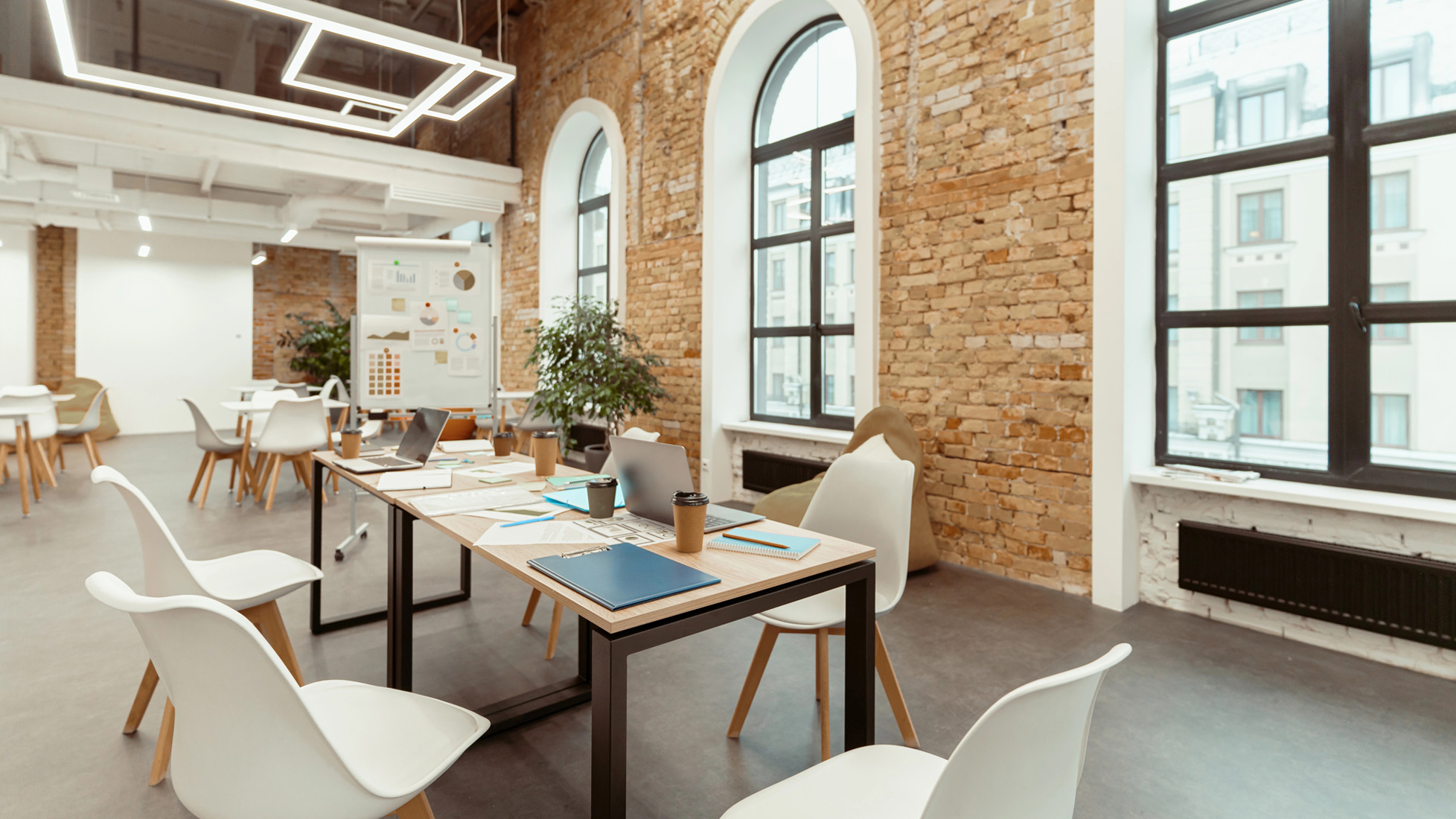
Given the ever-increasing UK temperatures office design has a role to play in finding ways to keep office spaces cool.
2026 Continuing The Increasing Temperature Trend
According to the Met Office summer 2026 is set to be the hottest on record, since records began with “provisional Met Office statistics show[ing] that the UK’s mean temperature for meteorological summer so far (1 June to 10 August) currently stands at 16.48°C, which is 1.88°C above the 1991-2020 average.”
The Met Office goes onto say that “To equal the current UK summer mean temperature record of 16.12°C set in 2025, the remainder of August would only need to average 0.21°C below the 1991-2020 long-term average for meteorological summer. Any warmer than this would establish a new UK record, with records starting in 1884.”
Mike Kendon, a Met Office senior scientist said “Another record-breaking summer now looks increasingly likely for the UK, following the second-warmest June, and second-warmest July on record and yet another heatwave imminent. We’ve seen temperatures hit 38°C in June, 35°C in early and late July, and this threshold is looking to be reached again in the next few days. It’s worth remembering we also reached 35°C in late May and easily exceeded both the May and June previous all-time temperature records this year. These statistics are a clear reminder – if one were needed – of the stark changes that we are seeing in the UK’s climate. Looking ahead, forecasts indicate temperatures will remain well above average through much of the coming week, with another spell of heatwave conditions expected to develop in some areas. While individual hot spells do not determine seasonal records on their own, sustained periods of warmth throughout the summer have contributed to the exceptionally high average temperatures we’ve seen so far.”
Record Breaking High Temperatures Becoming The Norm
UK scientists are reported as saying that record-breaking extreme weather is the new norm in the UK, showing that the country is firmly in the grip of the climate crisis. There is “profound concern” for health, infrastructure and the functioning of society as that “hot days” have dramatically increased in their frequency and severity. Weather records show that in the UK the number of days with temperatures 5°C above the average for 1961-1990, in the last 10 years, have doubled. The number has trebled for days 8°C above average, and for 10°C above average it has quadrupled. The UK has also become 8% sunnier in the last decade.
This change in UK weather is also echoed by the “State of the UK Climate in 2025” report which is published once a year by the Met Office, which presents “the latest assessment of UK climate trends, variations and extremes based on the most up to date observations from the land network of weather stations.”
The report found that 2025 was the “warmest year in the UK, with the last four years in the top five warmest. The most recent decade, 2016 -2025, has been 0.51°C warmer than the period 1991-2020, and 1.33°C warmer than 1961-1990.” The report states that over recent decades temperature extremes are becoming more frequent and more intense and gives the example that “the number of days over 30°C and nights over 18°C has more than quadrupled for Greater London for the most recent decade, 2016–2025, compared to 1961–1990. The average hottest day of the year has warmed by over 4.5°C in a swathe from Kent to Lincolnshire for the most recent decade, 2016-2025, compared to 1961-1990.” 2025 was also the “sunniest year in the UK series from 1910, and included the UK’s sunniest spring. The most recent decade 2016-2025 has been 4% sunnier than 1991-2020 and 10% sunnier than 1961-1990.”
Met Office “climate predictions suggest that by the end of the 21st century all areas of the UK are projected to be warmer. Hotter and drier summers are likely to become more common” and “Weather that was once considered extreme is becoming the “new normal”.
It’s clear that the UK has and will continue to experience hot weather as the high temperatures being experienced in 2026 are now becoming the norm.
Why Is Office Temperature Important?
According to Verdant, new research (based on Met Office HadUK-Grid temperature data combined with hours worked and gross value and applied to the empirical finding from Allianz and estimated according to a 3% fall in output per hour for every degree Celsius above 30°C) shows the “Summer 2026 heatwaves have already cost the UK economy £4.4bn” in lost output. The research predicts that “Without new policy action, cumulative losses of this kind will reach £25.6 billion by 2030 as heatwaves continue to intensify.”
Research based on a survey of 1,950 adults, published by the Grantham Research Institute on Climate Change and the Environment at the London School of Economics and Political Science and the Euro-Mediterranean Center on Climate Change (CMCC) found that the June 2026 heatwave led to 24 million lost hours of working and cost the UK economy £1.15bn.
The International Labour Organization (ILO) “Working on a WARMER planet – The impact of heat stress on labour productivity and decent work“ found that “heat stress is increasingly becoming an obstacle to economic activity” and “up to around 24–26°C workers do not slow down or suffer a loss of work capacity. However, above that temperature workers slow down and reduce their hourly output rapidly, with the productivity loss increase[s] exponentially up to around 33–34°C, at which level 50 per cent of work capacity is lost. This means that at a temperature of 33–34°C, the worker produces only half as much in an hour as he or she would have produced in the absence of heat stress, resulting in the equivalent of half a working hour lost.”
Manchester Metropolitan University state that “hotter summers are bad for the UK economy” and “are being shown to carry a heavy economic price.” In their study which looked at over two decades of local economic data across the UK alongside seasonal temperature records, they found that a 1°C increase in summer temperatures reduces UK economic growth by about 2.4%. The study also found that temperature increases cause the sharpest economic declines in the south of England, comprising the south-east (including London), the south-west, and the east of England. The study concludes that “summers are not just uncomfortable; they are economically costly.”
A study on the “Effect of temperature on task performance in office environment” found that “indoor temperature affects several human responses, including thermal comfort, perceived air quality, sick building syndrome symptoms and performance at work.” The results showed that “performance increases with temperature up to 21-22°C and decreases with temperature above 23-24°C” e.g. when the temperature reaches 30°C performance drops by 8.9%.
It’s not only productivity that’s impacted, high temperatures can also cause serious harm, ill health and death if not detected at an early stage. When the human body gets too hot and struggles to regulate its temperature or cool down it can cause heat stress and an inability to concentrate, muscle cramps, heat rash, severe thirst, fainting, heat exhaustion which includes fatigue, dizziness, nausea, headache, moist skin and heat stroke which manifests as hot dry skin, confusion, convulsions and eventual loss of consciousness.
How Can Office Design Combat High Kent and London Office Temperatures?
Office design can be used in many ways to combat rising office temperatures. Below we outline a few of the ways that an office can be designed to reduce temperature.
Optimise Layout for Better Airflow
The design of the office layout can play a major role in reducing the temperature to ensure a cooler office space. Keeping office temperature down can be achieved in a number of ways e.g. avoid having desks too close together which can trap heat, move desks away from direct sunlight and ensure there is a natural airflow by allowing air to flow freely throughout an office space by keeping pathways clear around windows, doors and air conditioning vents.
You can also aim for a cooler indoor temperature by using “non-solid” partitioning like slatted wood or open mesh which will allow air to continue to move around an office space, stopping it from getting trapped in small, closed spaces, while still providing privacy.
Office design should also account for tall furniture and place them in areas where they will not block air flow. Making use of high ceilings or open atriums that allow hot air to escape and centralising heat-producing equipment such as printers, copiers and servers into a separate, well-ventilated zone away from the main office area will also assist in keeping an office space temperature down.
Consider Cooling Systems
Having an air conditioning system in an office can help to ensure that it’s cool in the summer and warm in the winter. It’s important when integrating air conditioning into an office design to consider the balance between thermal comfort, aesthetics and the optimisation of equipment placement to maximise the performance of the air conditioning while minimising the physical footprint. It’s important to plan early in the office design phase to ensure discreet unit placement and the best zoning for open-plan layouts.
Having smart thermostats which automatically adjust the room temperature to set temperatures depending on office occupancy levels and outdoor temperatures are important in keeping office space cool in hot weather and warm during the cold winter months. With smart thermostats you can also setup zoned areas and create a mixture of different spaces where the temperature maybe lower allowing staff to choose to sit and work where they feel most conformable. Given that it’s been shown there isn’t one office temperature for everyone providing some flexibility may be the perfect solution to ensuring staff are “thermally” comfortable.
It’s also worth considering other cooling solutions such as chilled water systems and evaporative coolers to help maintain comfortable temperatures.
Utilise Height
If your office comes with high ceilings make the most of them. Height can help to keep an office cool through thermal stratification.
Thermal stratification occurs when indoor air separates into individual temperature layers. Warm, less-dense air expands, becomes lighter and naturally rises to the ceiling, while cooler air settles near the floor. You can then make the most of what architects call the stack effect, the natural movement of air into and out of buildings, driven by thermal buoyancy. The warm air pulled towards the ceiling can then escape through high-level openings, which creates negative pressure and draws cooler, denser air in through high-level windows or vents down to the lower levels.
Control Natural Light
The use of natural light indoors plays a major role in our health and wellbeing so it’s important to use as much natural light wherever you can, however it’s also important to strike a balance between keeping a space bright while not overheating it or making it thermally uncomfortable.
Windows can be a major contributor to increasing the temperature inside an office, especially during the summer months. It’s therefore important to move working spaces away from windows where the sunlight is the strongest. Office design can still take advantage of the spaces that receive direct sunlight by using them as breakout or informal meeting spaces.
Installing solar reflective and UV-filtering window film can block up to 75% of solar heat and UV rays while still allowing light in. The use of thermal blinds or light filtering roller or venetian blinds can also help to control heat and glare. Outside screen blinds, vertical fins, shutters, awnings and canopies are also an option. Using light-diffusing materials can also soften harsh sunlight.
Smart Lighting Choices
Office lighting choice can play a role in keeping an office cooler.
Replacing all overhead and desk lighting from incandescent or fluorescent lighting to energy-efficient LED lighting can have a large impact on the amount of heat generated by the lighting alone. Traditional incandescent bulbs turn 90% of their energy into heat rather than light. Fluorescent lighting can also generate heat. In comparison LED lighting converts almost all its energy into light instead of heat. LEDs stay cool to the touch and do not warm up the air.
Another option is to use task related, localised LED desk lighting where possible to replace overhead lights and install dimmer switches or use timed or occupancy-based sensors so lights aren’t used when they’re not required or left on in empty rooms.
Use Energy Efficient Equipment
High office temperatures are the result of high outside temperatures. However, they can also come from inside the office too. We previously mentioned avoiding staff overcrowding when planning the office layout, but heat can also come office equipment such as desktop computers, monitors, laptops, photocopiers and printers which all give off heat when in use.
Conducting an equipment audit to identify older or unused pieces of equipment is important. Where older equipment is required, it could be replaced with more energy-efficient equipment which will reduce the amount of heat produced. Where that’s not possible some office equipment can also be moved away from the main office area to a designated equipment zone to reduce office temperatures, or it can be turned off or unplugged when not in use.
Choose Light and Reflective Colour Palettes
Choosing the right colour scheme when designing an office is important when it comes to keeping an office cool. Colour affects office temperature in two different ways. There is a “psychological perception” of how “warm” a room is based on colour choices and there is the physical impact of how colour retains or reflects heat.
Warm colours such as reds, oranges, yellows make people feel physically warmer by triggering mental associations with natural heat sources like the sun and fire. This can in fact sometimes raise perceived room comfort by a couple of degrees. In the same way cool colours like blues and greens are perceived by the brain as the same calming cooling colours of elements in nature like water, ice, grass and trees.
From a physical perspective, dark colours absorb, retain and then release heat into a space causing a temperature increase whereas lighter colours reflect heat rather than absorb it.
Employ Cooling Materials and Finishes
Just as with colours the materials and finishes within an office space can influence how heat is absorbed and retained. The choice of material used can significantly impact temperature e.g. materials such as light-coloured, highly reflective smooth finishes and hard surfaces like vinyl tiles, reclaimed wood and bamboo do not trap heat the way thick carpets do.
Using breathable mesh or natural fibre upholstery fabrics like cotton, linen, wool, and hemp on chairs and soft seating increases airflow and helps to absorbs moisture. These materials stop heat and sweat from trapping against your body, preventing that hot, sticky feeling you get with fake leather or thick polyester, keeping you comfortable during warm weather.
Bring The Outside, Inside Through Plants
Designing an office space to incorporate plants isn’t just about aesthetics, indoor plants bring with them a long list of benefits. One of those benefits is helping to create a cooler environment.
Plant and moss walls, living pictures and wall plants, cabinet and container planting and hanging plants all act as cooling agents through the process of transpiration. Through transpiration, water and nutrients are taken up by the plant and sent to the stem and leaves as part of photosynthesis and then released as water vapor through the leaves. As the water vapour evaporates, heat is removed from the air, providing a cooling effect.
High-transpiration, low maintenance plants that are ideal in offices are Ficus Elastica (rubber plant), Ficus Benjamina, Aglaonema, palm trees and Sansevieira or Snake plant.
Encourage Hydration
During hot weather staff can easily and quickly become hydrated causing inability to retain focus, a decrease in productivity and energy levels. Providing water coolers, tea points or kitchen space encourages staff to stay hydrated and provides a perfect place for an impromptu catch up with colleagues. Having a place where staff can get a drink on every floor is likely to encourage staff to drink throughout the day.
It’s clear that with climate change the UK will continue to experience high temperatures and multiple yearly heatwaves. Given this, it’s vital that companies look to control the temperatures within their office spaces as part of their office design, as the effect of rising temperatures within offices directly impacts the UK economy, business productivity and wellbeing.
JBH Refurbishments, Experts In Office Design and Refurbishment
JBH Refurbishments are a cat a and cat b fit out contractor and have over 30+ years experience in Kent and London inclusive office design, office refurbishments and fit outs. We understand what’s required to carry out an office design and refurbishment that enables a comfortable thermal working environment for your staff. We can provide the right expertise for your Kent or London office refurbishment. You can contact us on 0333 207 0339 or via our contact page for a free on-site consultation.