

“Working from home could be harming your health, warns Chris Whitty”. This was the eye-catching headline published by the Independent newspaper on 10 July 2026. So, what does the Independent headline mean?
If we delve a bit deeper into the article it becomes clear that the reason for the article is to warn against “the health dangers of prolonged sitting, coinciding with the release of new guidance on exercise benefits” with Professor Sir Chris Whitty, England’s chief medical officer placing emphasis on “encouraging sedentary individuals and those working from home to increase their movement.” The Independent reports that Chris Whitty explained this thinking in a briefing where he said, “Without wanting to exaggerate, I think it’s important people think through, for example, hybrid working means quite a lot of people could very easily do very little other than leave their homes, where previously people would be routinely going to work, and that often meant at least some physical activity.”
The emphasis in the Independent article is on home working; however, we know that working in an office or other workplace can also cause sedentary behaviour. It’s not just a home working issue.
Sedentary Behaviour Is Damaging To Health
Many research articles backup Chris Whitty’s remarks.
In a PubMed Central article on the “Impact of Prolonged Sitting on Lower and Upper Limb Micro- and Macrovascular Dilator Function” it was found that prolonged sitting markedly reduces lower leg micro- and macrovascular dilator function and selectively impairs upper arm microvascular reactivity.
A “practice-based study designed to reduce prolonged sitting time and improve selected health factors among workers with sedentary jobs” found that when comparing groups who “received a sit-stand device… to fit their workstation” and those that did not, over a 7-week period sitting was reduced by 224% (66 minutes per day) and upper back and neck pain was reduced by 54%.
A study published in in PLOS One of 91,292 UK Biobank participants found that each additional hour of prolonged sedentary behaviour was associated with a 10% higher risk of overall cancer mortality. Replacing 1 hour per day of prolonged, interrupted sedentary behaviour with light physical activity was associated with a “12% lower hazard when 1 hour per day was replaced with light physical activity (PA), an 8% lower hazard when 30 min per day was replaced with moderate PA, and 22% lower hazard when 5 min per day was replaced with vigorous PA.”
Phyisical Activity Is Important For Physical Health and Mental Wellbeing
It’s clear that being active cuts the risk of diseases and deaths from any cause, with strong reductions in obesity, type 2 diabetes, heart disease, stroke and some cancers.
The latest Chief Medical Officers’ (CMOs) physical activity guidelines updated in July 2026 from guidelines previously published in 2019 emphasises that “any exercise is better than none, no matter how small”, as “every movement counts”.
In the new guideline’s foreword, the CMOs of Wales, Northern Ireland, Scotland, and England state “If physical activity were a drug, we would refer to it as a miracle cure, due to the great many illnesses it can prevent and treat.” They go onto say that “since the first Chief Medical Officers’ guidelines on physical activity the evidence that it has a very positive impact on physical and mental health has got even stronger, for women and men and across all ages.”
This new evidence also highlights that “the benefits of physical activity for health far outweigh the risks in many groups who might be concerned about this, including for people living with disability and most long-term conditions.”
Public Health Minister, Sharon Hodgson supports the findings and says, “Being physically active is one of the simplest ways people can improve both their physical and mental health, and these refreshed guidelines provide clear, evidence-based advice to help everyone make movement part of everyday life.”
The Chair of Sport England, Chris Boardman also backs the updated UK CMO physical activity guidelines saying “Physical activity is one of the closest things we have to a wonder cure… moving more improves our physical and mental health, helps us stay independent for longer. These updated guidelines give people clear, evidence-based advice on what we’re aiming for and how to build more movement into everyday life. They will play an important role in helping more people enjoy the benefits of being active, creating a healthier, happier, and more resilient nation.”
Andy Taylor, CEO of Active Partnerships states that “These refreshed guidelines are a reflection of the growing evidence that all movement is beneficial, but they also remind us that the greatest opportunity lies in supporting those people who are currently the least active.”
Exercise Recommendations
The CMO report found that “health benefits of physical activity on physical and mental health are significant when we go from no activity to even some activity.”
It also states that health gains rapidly build from “some activity” to “the point when we are doing around 150 minutes a week.” 150 minutes per week appears to be a sweet point, however, benefits still increase, just at a slower rate, with additional activity.
The CMOs therefore recommend that adults aim for at least 150 minutes (2 hours and 30 minutes) a week of “moderate intensity activity (such as brisk walking or cycling), or 75 minutes of vigorous intensity activity (such as running), or even shorter durations of very vigorous intensity activity (such as sprinting or stair climbing), or a combination of moderate, vigorous and very vigorous intensity activity” but importantly “if you do no physical activity do some, and if you do some do a bit more”.
As well as maintaining general physical activity the CMOs state everyone must maintain their strength and balance through activities and exercises such as resistance exercises which maintain and build muscle strength and improve balance and those who have been inactive or are taking GLP-1 (glucagon-like-peptide-1) agonist drugs need to ensure they do activities to maintain muscle strength.
How Health Can Improve With The Smallest Increases In Movement
If you’re hesitating at the idea of two and a half hours of any kind of activity there is clear evidence that even the smallest increases of movement such as simply reducing the amount of time awake spent sitting, particularly for prolonged periods; taking the stairs rather than using the lift or walking from one part of the workplace to another can in fact have a significant impact on long-term health and wellbeing.
A study by Columbia University “Breaking Up Prolonged Sitting to Improve Cardiometabolic Risk: Dose–Response Analysis of a Randomized Crossover Trial” of 25 participants who attended a screening visit, where 11 were randomised; looked to address the question “how often and how long sedentary time should be interrupted”. The study examined the acute effects of multiple doses of a sedentary break intervention on cardiometabolic risk factors, alongside evaluating the effectiveness of different rates and durations of sedentary breaks with the view to answering the question – what is the least amount of activity needed to counteract the health impact of a workday filled with sitting?
The study was conducted over 8-hours on 5 days with one inactive group which acted as the control condition and four groups that took breaks. Each break was different in timing and duration from every 30 min for 1 min, every 30 min for 5 min, every 60 min for 1 min, and every 60 min for 5 min. During the breaks participants did light-intensity walking. Measurements of glucose and blood pressure were taken and were compared with the control group. The results showed that in comparison to the control glucose levels were significantly reduced for every 30 min for 5 min and reductions in blood pressure were observed for every 60 min for 1 min and every 30 min for 5 min. The study concluded that every 30 min for 5 min breaks would be ideal for reducing glucose levels and every 60 min for 1 min breaks might be enough to lower blood pressure.
A larger study of more than 11,000 US employees, most of whom were in office jobs, working 8–9-hour shifts, were surveyed and it was found that “taking five-minute breaks – or “movement snacks” – every hour was the best and most feasible way to boost wellbeing without losing efficiency.”
A PubMed Central article on the “Public health importance of light intensity physical activity” highlighted that a marked reduction in chronic disease and mortality risk is associated with light intensity physical activity including those activities which are part of our daily living such as casual walking. The article also points out that all movement across a day should be considered rather than only evaluating activity in isolation when considering health.
In another study of 851 women and men, “Replacing sedentary time with physical activity: a 15-year follow-up of mortality in a national cohort” carried out by the Karolinska Institutet, Stockholm, Sweden, participants were motion tracked rather than basing results purely on feedback, it was found that replacing just 30 min per day with “light-intensity” physical activity significantly reduced “all-cause mortality risk” and cardiovascular disease. Replacing only 10 min of sedentary time with “moderate-vigorous” physical activity also caused a reduction in cardiovascular disease mortality risk.
It’s clear from the research above that even minimal gentle exercise can play a significant role in health and wellbeing. Sitting or staying still for too long can be applied to those working at home, and in an office or other workplace. It’s therefore important that all environments, whether they be in a home office or work office, should be designed to encourage movement.
What Can Office Design Do To Encourage Movement?
Given that we spend 8-10 hours per day at work, mostly sitting, an important question is what can office design do to encourage movement?
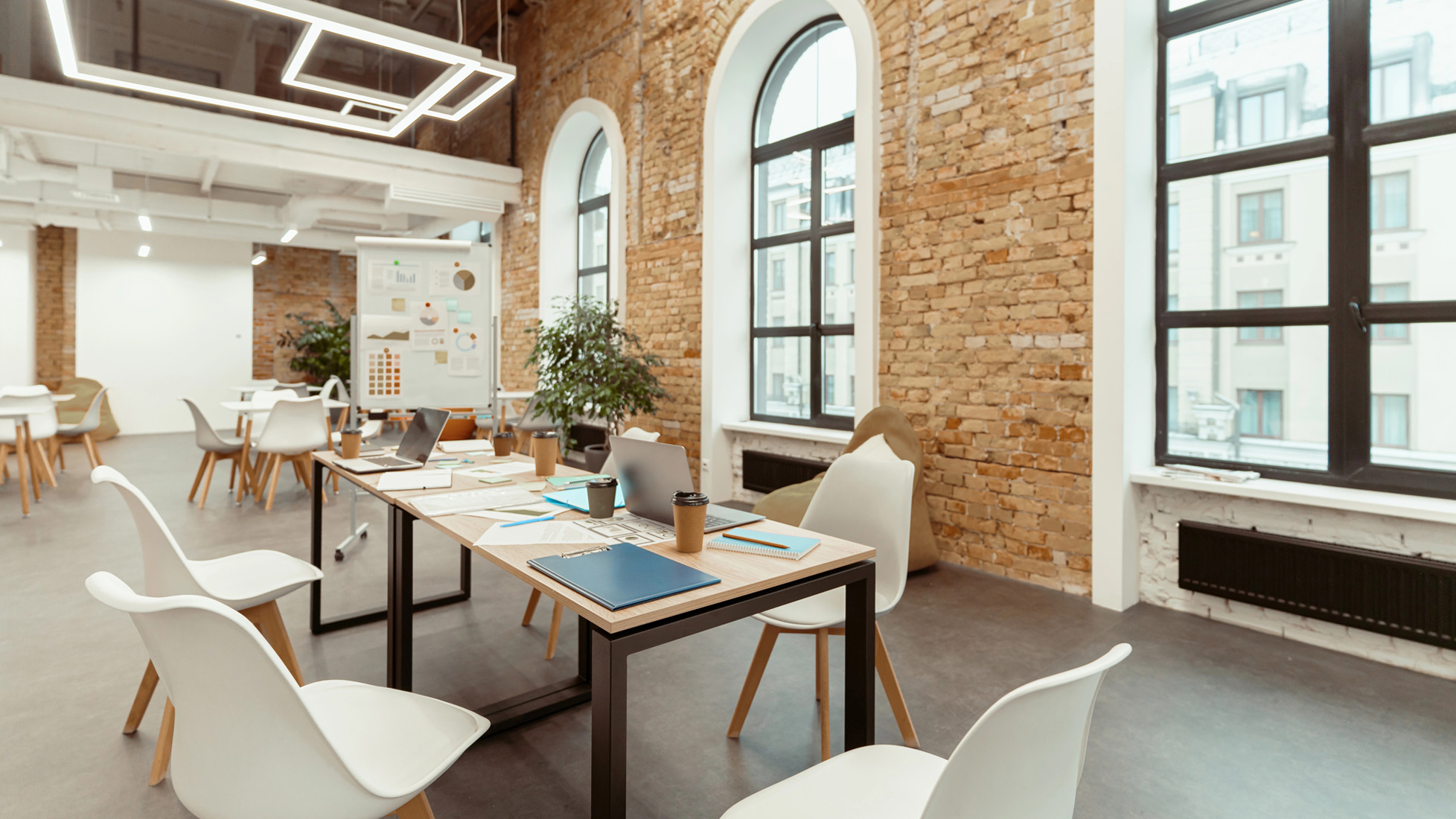
In fact, there are many ways that an office design can encourage staff to be active including designing activity based working spaces and breakout zones, decentralising shared resources, creating exercise spaces for staff or indoor walking paths with routes around the office to support active breaks during the work day; and outdoor areas, where space is available, where walking or cycling is encouraged.
There are also furniture options such as height-adjustable sit-stand desks, standing meeting tables and active standing and seating options like wobble stools or balance boards which can promote movement.
Activity Based Working
One of the first steps in office design is to decide what type of layout would best meet the business’s needs. Where movement is a priority it’s important to consider how the office design can make it easier for and encourage users to move throughout their day.
There are a number of flexible, dynamic office design layouts which go beyond providing functional workstations where staff spend most of their working day. One such option is Activity-Based Working (ABW). An ABW layout encourages movement. Instead of keeping staff anchored to a single workstation. ABW is designed to provide varied, task-specific zones, tailored to the task in hand to enable private, focussed individual work; or collaborative team and creative work or to provide meeting or breakout spaces so that office users can choose to move to the “appropriate working space” depending on their working style and the type of work or task they are carrying out.
By enabling staff to easily move between different types of working spaces, staff can take personal control over their working environment, empowering them to move to different setups which will enhance their workplace performance, efficiency, and enjoyment or simply when they feel it’s required.
Breakout Areas
Breakout areas, within an office design, provide numerous benefits including providing a space to “get away” and switch off from work for a few minutes. By switching off from a task and stepping back, brains can rest, refresh and recharge allowing staff to refocus when they go back to work, which can be the trigger that helps us to see solutions more easily, to be more creative, to come back energised and complete a task on time. Talking a break can also help staff reset, prevent decision fatigue, reduce stress, and avoid burnout.
Another of the biggest benefits of a breakout area is it directly encourages staff to get up from their workstation, stretch their legs, change posture and move to another area and in effect take some exercise, breaking up sedentary habits, preventing them from remaining inactive throughout the working day.
Shared Resource Areas
Rather than having shared resources within the same area as staff work, they can be setup in dedicated areas away from the main workspace.
Centrally locating equipment and amenities, such as printers, and communal tea points, increases staff movement as staff have to leave their work area to obtain the resources they need. This also brings with it added benefits such as bringing together staff from different teams who may otherwise not meet, enabling spontaneous interactions, improving cross-team collaboration, and encouraging organic knowledge sharing.
Height-Adjustable Sit-Stand Desks
We’ve all grown used to the standard workstation and in many ways, it’s become a staple of the office space however as far back as 2014 the Get Britain Standing campaign was officially launched by the Active Working Community Interest Company to highlight the fact that people, on average, spend 8.9 hours each day sitting in the office and this sedentary behaviour can be extremely damaging to health leading to a variety of health problems, and to encourage people to move more in their daily routines.
As a result of this campaign and other research, new desks were developed such as the height-adjustable sit-stand desk (also known as “standing desks” or “active workstations”). This type of desk has a single or split-level worktop which can be lowered or raised to allow the user to either work sitting or standing. The sit-stand desk gives the user the option to change from the usual sitting position to a standing position while working, allowing them to adjust their working stance throughout the day, creating movement, and breaking the day-long sitting only position.
For office spaces where all the desks are traditional sitting desks “desk risers” (or standing desk converters) can be utilised to convert existing desks into more flexible height adjustable desks. Desk risers are a height-adjustable platform that sit on top of your existing desk that can be raised or lowered according to the height required. It holds your monitor, keyboard, and mouse; adding standing capability to a fixed-height, traditional desk. They allow you to easily switch between sitting and standing without having to replace your current office desks.
Active Standing and Seating Options
Sit-stand desks provide movement and encourage users to stand, however it’s also important to consider how to “remain active” while standing and while sitting as research shows that it’s just as important that when we stand, we don’t remain still and when we sit it’s important that we move often, move easily and that the chairs or stools we use encourage frequent motion which is essential to boost blood circulation. It’s important to note that subtle movements are less tiring than just standing still and can also help avoid strain on the feet, ankles, knees, hips and back.
There are a number of different options which encourage “active sitting and standing.” These options introduce “controlled instability” to engage your core and improve spinal alignment and can be utilised to maximise movement throughout the day.
Options for standing include anti-fatigue mats which act as cushioned surfaces that encourage continuous, tiny micro-movements of the feet and calves to promote blood return; balance boards placed under your feet while standing, which gently tilt and wobble to activate your core and calf muscles and under the desk treadmills or desk bikes that let you walk at a very slow, casual pace or cycle quietly while taking calls, attending zoom/Team meetings or doing administrative tasks.
Sitting options include wobble/balance stools which have rounded bases that allow 360-degree tilting, gently working your core muscles; up stools which combine motion and mobility, stimulating hip and core movement and which can offer the same movement benefits you would get from sitting/exercising on a gym ball; saddle stools which position your hips higher than your knees (a 135° angle), opening your hip flexors and encouraging natural, upright posture and balance balls that engage stabilisers by forcing you to constantly make micro-adjustments to maintain balance.
Exercise Spaces
Companies that have the space can incorporate active break zones into their office design to encourage staff movement. These zones can offer the dual purpose of talking a break and promoting movement such as table tennis, ping-pong, table football, air hockey, and putting greens which provide casual, low-impact, and social physical activity.
Alternatively, rooms which encourage exercise like a fully equipped gym, or space where there are treadmills, exercise bikes, or cross-trainers; or areas for stretching with exercise mats, foam rollers, and resistance bands, allowing staff to drop in for a quick stretch, are also a good option to encourage staff to be active. Space can also be set aside for more organised, structured classes like yoga or Pilates.
Where space allows, walking tracks or outdoor walking areas can also provide major health benefits.
JBH Refurbishments, Experts In Office Design and Refurbishment
JBH Refurbishments are a cat a and cat b fit out contractor and have over 30+ years experience in Kent and London inclusive office design, office refurbishments and fit outs. We understand what’s required to carry out an office design and refurbishment that encourages movement and can provide the right expertise for your Kent or London office refurbishment. You can contact us on 0333 207 0339 or via our contact page for a free on-site consultation.