According to Gallup’s latest “State of the Global Workplace, Understanding Employees, Informing Leaders” 2025 report “Low employee engagement is holding back global worker productivity” Employee engagement fell by 2 percentage points to 21% and the tune of an estimated cost of $438 billion globally in lost productivity. To put this into perspective Gallup state that global employee engagement and wellbeing have generally risen over the past decade, in fact, employee engagement has only fallen twice since 2009 – in 2020 (during the pandemic) and in 2024.
It’s understandable that employee health, wellbeing and engagement suffered in 2020 and with the pandemic came changes to employee’s outlook in terms of what they were seeking from their workplaces and the flexibility their employers could provide in terms of hybrid working and remote working. Gallup found that “since 2020, employee life evaluations have declined steadily to a record low in 2024, alongside declines in mental health and increases in daily negative emotions. Record high levels of negative emotions, like stress and worry, have fueled declining wellbeing and mental health at work.”
With many companies expecting staff to now come into the office either full time or part time employees are undergoing a change which in many cases has impacted employee mental health leading to low morale, heightened stress and anxiety and lower engagement levels. We know that engagement is strongly linked to health and wellbeing. Where engagement falls wellbeing is also impacted.
The Gallup data is backed up by findings from a poll by recruitment firm Robert Walters, which surveyed 2,000 office based professionals “Three in five workers are disengaged and costing UK economy billions, study finds” which found that 60% of employees felt disengaged from their workplace due to the post-pandemic work culture. Almost 50% of staff felt their workplace was unrecognisable.
Employee Engagement Matters
Increasing employee engagement brings with it a number of business benefits. This is backed up numerous research papers, surveys and articles, some of which are listed below.
Reward Gateway’s “Employee Engagement: An Economic Value Study” demonstrates a concrete link between employee engagement and good business outcomes. Analysis of over 300 companies found that “[Businesses] that have a highly engaged workforce tend to also be those that report that business is booming. Prioritising and fostering high employee engagement is a strategic necessity for driving superior business results and long-term viability. Companies that fail to nurture an engaged workforce place themselves at a critical disadvantage versus their more invested competitors.”
A Gartner survey of nearly 3,500 employees carried out in June 2023 found that those who report being energised and excited about their work are 31% more likely to stay at their organization, 31% more likely to go above and beyond (discretionary effort), and contribute 15% more.
The Institute for Employment Studies (IES) say “Engagement is consistently shown as something given by the employee which can benefit the organisation through commitment and dedication, advocacy, discretionary effort, using talents to the fullest and being supportive of the organisation’s goals and values. Engaged employees feel a sense of attachment towards their organisation, investing themselves not only in their role, but in the organisation as a whole.” They go onto state that “Engaged employees are more likely to stay with the organisation, perform 20 per cent better than their colleagues and act as advocates of the business. Engagement can enhance bottom‐line profit and enable organisational agility and improved efficiency in driving change initiatives. Engaged individuals invest themselves fully in their work, with increased self‐efficacy and a positive impact upon health and well‐being, which in turn evokes increased employee support for the organisation.”
Gallup’s “The World’s Leading Employee Engagement Survey” of over 3.3 million workers across 100,000+ teams which sought to understand the effects of engagement on essential business metrics found that highly engaged teams consistently outperform their peers in key business outcomes including 10% higher customer loyalty/engagement. 14% higher productivity, 18% higher productivity, 23% higher profitability, 70% higher wellbeing, 78% less absenteeism, 21% less turnover for high-turnover organisations and 51% less turnover for low-turnover organisations.
Firstup, who provide data insights to improve the employee experience published an article “Why employee engagement is key to company success” which states that “Employee engagement increases productivity by 18% and boosts profitability by 23%, making it a critical business objective. High employee engagement reduces absenteeism by 78%, showing the impact of targeted employee engagement programs.”
In a CoreNet Global and CBRE Group survey companies which focussed on employee health and wellness reported a 47% workers engagement and 25% retention rate increase and a decline in absenteeism.
Office Design Can Help With Employee Engagement
Clearly employee engagement is important and companies are trying to address falls in engagement through training, work practices and workplace benefits but one of the ways to improve and enhance employee engagement that’s often overlooked is through office design.
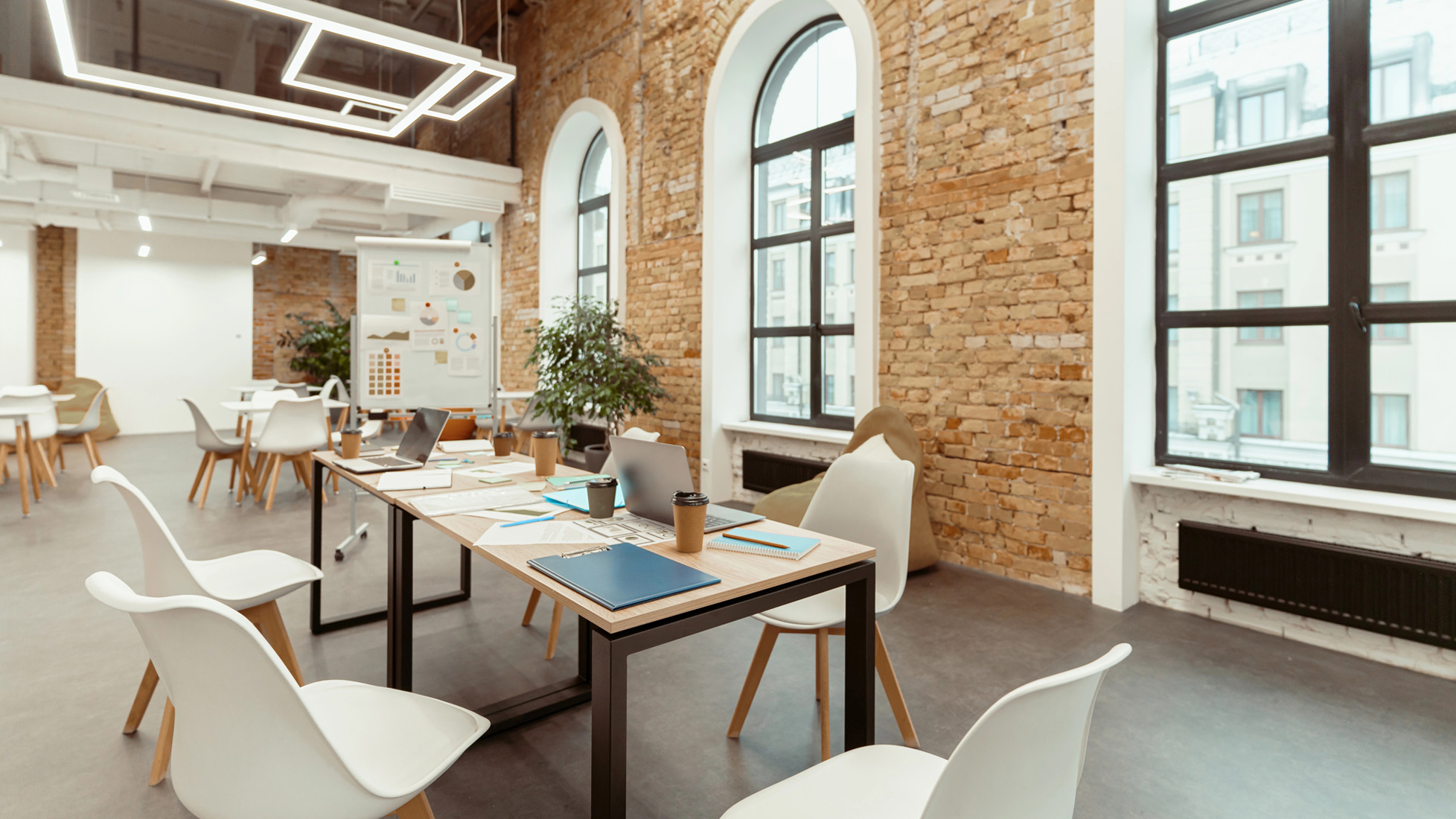
An office that’s designed for health and wellbeing can deliver a positive and engaging environment for employees. It can inspire, motivate and empower by providing the right support to both encourage individual work, collaboration and a sense of community which in turn increases engagement, focus, productivity and decreases absenteeism and employee turn-over. Below are a few of the many office design ideas that will help businesses to achieve this.
Don’t Design For Aesthetics, Look At What Works For Your Business
Offices shouldn’t be designed based on aesthetics, or assumptions, or what has worked well in the past. Instead look at your current office design and ask what works and what doesn’t when it comes to staff engagement?
List everything that should be kept and everything that hinders your staff and work processes. Think about your business goals, in terms of employee engagement, productivity, creativity, teamwork, collaboration, communication, company culture or staff turnover. It’s also worth documenting what you think you need or wish you had.
Based on this list consider how you can implement office design changes that address how to keep the features that work well, get rid of the elements that hinder engagement and add additional office design requirements that you need or wish you had.
Offer Diverse Workspaces
Businesses now recognise that offering different types of office space will better meet the needs of staff and will accommodate staff’s different work preferences and styles including private, quiet zones for work that needs privacy and focus, collaborative areas to allow staff to come together, space for wellbeing and breakout spaces where staff can go to relax and unwind.
Privacy
Having office zones designed for private or quiet work can allow staff to get away from the hustle and bustle of a noisy office environment. There are times when we all need a quiet place to work especially if the work being carried out requires concentration and focus.
Collaboration
In many businesses teamwork and collaboration are vital and having the workspace to be able to bring people together is a must. Leesman’s the “Why of the Workplace” found that Meeting rooms both small (72%) and large (58%) score highly as being important to employees and are one of “the non-negotiable elements needed to create an appealing, supportive and efficient corporate workplace” and are needed to form “the new minimum viable office.”
Wellbeing
Wellbeing in an office space is about having an environment which enables and encourages an engaged, motivated, enthusiastic and productive workforce. Thinking about the wellbeing of staff should be part of any modern office design.
Creating wellbeing spaces specifically designed to provide a break from the noisy office environment and a place to destress and unwind is widely recognised as an important part of the way in which companies can support their staff’s mental and physical wellbeing.
Wellness spaces can something as simple as a room with calming colours, comfortable furniture and planting where staff can switch off from their work to a fitness room or gym which provides the facilities for low-intensity aerobic exercise.
Breakout
Breakout spaces, kitchens and tea point areas which encourage social interaction and enable employees to catch up with other members of staff in an informal setting provide many benefits including an opportunity to unwind, relax and recharge, engage with other employees and feel part of the company community.
Design For Access
Ensuring an office space can be used by everyone is a must. Accessibility for all employees is often overlooked when it comes to office design but should be a factor that’s considered at the beginning of the office design phase.
Making an office that is accessible to everyone, and which accommodates a range of diverse needs, brings with a range of benefits. A survey by Glassdoor found that more than 75% of employees and job seekers report a diverse workforce is an important factor when evaluating companies and job offers.
According to a Boston Consulting Group study of 1,700 companies in eight countries (Austria, Brazil, China, France, Germany, India, Switzerland, and the US) “companies that reported above-average diversity on their management teams also reported innovation revenue that was 19 percentage points higher than that of companies with below-average leadership diversity—45% of total revenue versus just 26%.”
Research by Cloverpop suggests that “diverse teams make better decisions 87% of the time, drive decision-making twice as fast with half the meetings and improve decision team results by 60%.”
Accommodations need to be made for sensory, cognitive, and neurodiverse requirements as well as physical disabilities. Key accessibility considerations should include aspects that address both sensory and physical needs and requirements.
Utilise natural light wherever possible. Ensure lighting provides good illumination and doesn’t cause glare where it’s installed. Areas with varied lighting or where the light level can be fully controlled to provide a space with lowered light levels are also important.
Think about the impact of noise throughout the office space and minimise noise levels by using sound absorbing materials such as acoustic screens, partitioning, dividers and panels. Plants can also help to reduce office noise as leaves, branches and stems absorb, deflect and refract sound. Acoustic office pods can be installed to isolate and dampen noise while providing additional meeting spaces. Suspended or drop ceilings are also effective at absorbing noise. Use carpet on floors, rather than tiles to reduce ‘footfall’ noise as carpets soften and absorb sounds making for a quieter environment. Introducing private spaces or quiet zones can also provide areas when staff need somewhere to work in private or when main office noise may cause over stimulation leading to anxiety and stress.
Include assistive technologies like clear signage, high contrast visuals, large print, screen readers, braille displays, magnifiers, audio descriptions, speech to text software or voice activated systems to help staff find their way around an office space.
In order to provide accessible routes throughout an office, the office design needs to include wider doorways and corridors, access ramps and railings or lifts, wheelchair-accessible layouts, wider spaces between desks; disabled, height adjustable desks; ergonomic chairs, accessible storage, grab rails in washrooms, height adjustable kitchen sink units and work tops, lower washroom basins, cable management racks, desk mounted sockets and adjustable monitor arms. Accessible parking with designated parking spaces close to the entrance are also a must.
Think About User Experience (UX)
How staff experience an office space will decide how well that space supports staff in enabling them to do their jobs, meet their day-to-day workplace challenges and ultimately how engaged they will be. A well-designed office space will provide a working environment that creates a setting where staff are happy to come to work and where they feel valued.
Trymata says that uncovering user behaviour can help to gain an understanding of user needs to guide the design process and inform decision-making. They go onto say that “By observing real users in their natural environments, designers can gain insights into how they engage with a product, identify challenges they face, and uncover opportunities for improvement. This method provides contextual information that enhances the understanding of user needs and preferences.”
A conference paper by ResearchGate “Design for UX in Flexible Offices – Bringing Research and Practice Together” states there is a gap in the design research and practice that stifles improvements and idea generation when it comes to flexible office environments that needs to be addressed in order to improve the user experience at work.
The University of New South Wales found that “Prioritising user experience, fine-tuning work spaces to support user needs and designing for health and wellbeing will deliver higher levels of satisfaction, perceived productivity and creativity” in the workplace. They state that the key to the office of the future isn’t just about flexibility but how office space addresses the challenges faced by staff, “taking into account physical workspace, the diversity of people’s needs and the power of technology.”
The British Council for Offices poses the question “Want staff back in the office? Think ‘Customer first’ and prioritise experiences” and says “staff must be treated like customers if employers want them back in the office. This means making the office a place that gives them the experiences they want.” This is backed up by a Forbes article “Office Design Matters More Than Ever—Using UX Principles Can Help” which says that successful UX is dependent on understanding your customer, by listening to their feedback. Making your staff’s life’s easier by “solving the issues that impacted employee efficiency, creating a new environment that truly makes them want to step through our front doors” can lead to a successful UX office design.
Emerald Insight’s paper on “User-focused office renovation: a review into user satisfaction and the potential for improvement” looked at the importance of user satisfaction in office renovation and found that “a user-focussed renovation approach can enhance user satisfaction in offices and their functional quality while meeting energy performance goals.” They found a number of factors which increased user satisfaction were associated with “physical and psychological satisfaction and comfort” and included thermal comfort, air quality, noise, light, user control, privacy, spatial comfort, concentration, communication/collaboration and social contact.
Factor In The Essentials
Ensuring the “essentials” are taken care of in terms of temperature, light and air quality plus incorporating the use of plants within an office design can play a major role in increasing employee engagement.
Temperature plays an important role in the workplace, even more so today as the UK suffers through heatwaves which are more intense and occur more often. According to ScienceDirect “High temperatures can have a negative effect on work-related activities because workers may experience difficulties concentrating or have to reduce effort in order to cope with heat.”
Maintaining an optimal temperature range in the workplace can enhance focus, reduce errors, and improve overall work quality. Conversely, extreme temperatures, both hot and cold, can negatively impact employee well-being, leading to decreased productivity, increased absenteeism, and even higher rates of errors.
Office lighting can have a major impact on staff health, wellbeing engagement and productivity. The use of natural light, where possible, can play a major role in supporting wellbeing. Where natural light isn’t available LED lighting and the ability to adjust lighting levels is key. Light colour is also another factor to consider. Warm colours can provide a calming atmosphere; cooler colours can promote focus.
Air quality can also impact employee engagement. In fact, the Confederation of British Industry (CBI) found that improving office air quality could boost London employees’ productivity by up to 15% which translates to an additional £17,400 of output per worker. They go onto say that “These benefits potentially accumulate even further to impact entire local economies. Scaling up to a city-wide level, improved air quality throughout all offices could deliver an additional £38bn of economic activity to the London economy, boosting overall output by between 4% and 8%.”
Integrating plants and greenery into office design, known as biophilia, isn’t just for the sake of aesthetics. Plants can impact health and wellbeing, reduces stress levels, increase attention span, improve memory and learning, increase creativity, and reduce presenteeism and absenteeism. The Green Plants For Green Buildings report “The Global Impact of Biophilic Design in the Workplace” surveyed 7,600 employees from 16 countries and found that “nature and biophilic design impact our well-being, productivity and creativity at work, [and] are significant.” The report found that “workers’ productivity depends on the environment they are in” and “perceptions of well-being can increase by up to 15% when people work in surroundings that incorporate natural elements, providing that connection to nature, in contrast to those who have no contact to nature in their workplace.”
Allow Personalisation
We know that when it comes to office space choice matters. If staff are not allowed to personalise their workspace it can leave them feeling that the space is not their own. It’s not about clutter but being able to add simple touches that make staff feel they are in control of their own workspace.
An article published by PubMed “The relative merits of lean, enriched, and empowered offices: an experimental examination of the impact of workspace management strategies on well-being and productivity” looked at “the impact of space management strategies in which the office is either (a) lean, (b) decorated by the experimenter (with plants and art), (c) self-decorated, or (d) self-decorated and then redecorated by the experimenter” and found that a bare desk removes a sense of identity and empowerment. The researchers found there were superior outcomes when offices were decorated rather than lean. Further improvements in wellbeing and productivity were observed when workers had input into office decoration.
Employee engagement plays an important role in all businesses. Designing an office with engagement in mind can provide staff with an office environment that meets and exceeds their needs and puts you ahead of competitors.
JBH Refurbishments, Experts In Office Design and Refurbishment
JBH Refurbishments are a cat a and cat b fit out contractor and have over 30+ years experience in Kent and London office design, office refurbishments and fit outs. We can provide the right expertise for your Kent or London office refurbishment. We understand what’s required to carry out an office design and refurbishment that engages staff.
From your brief, to putting together a project plan, to developing your office design and layout to delivering your office fit out JBH Refurbishments will provide the right expertise for your project providing peace of mind. You can contact us on 0333 207 0339 or via our contact page for a free on-site consultation.