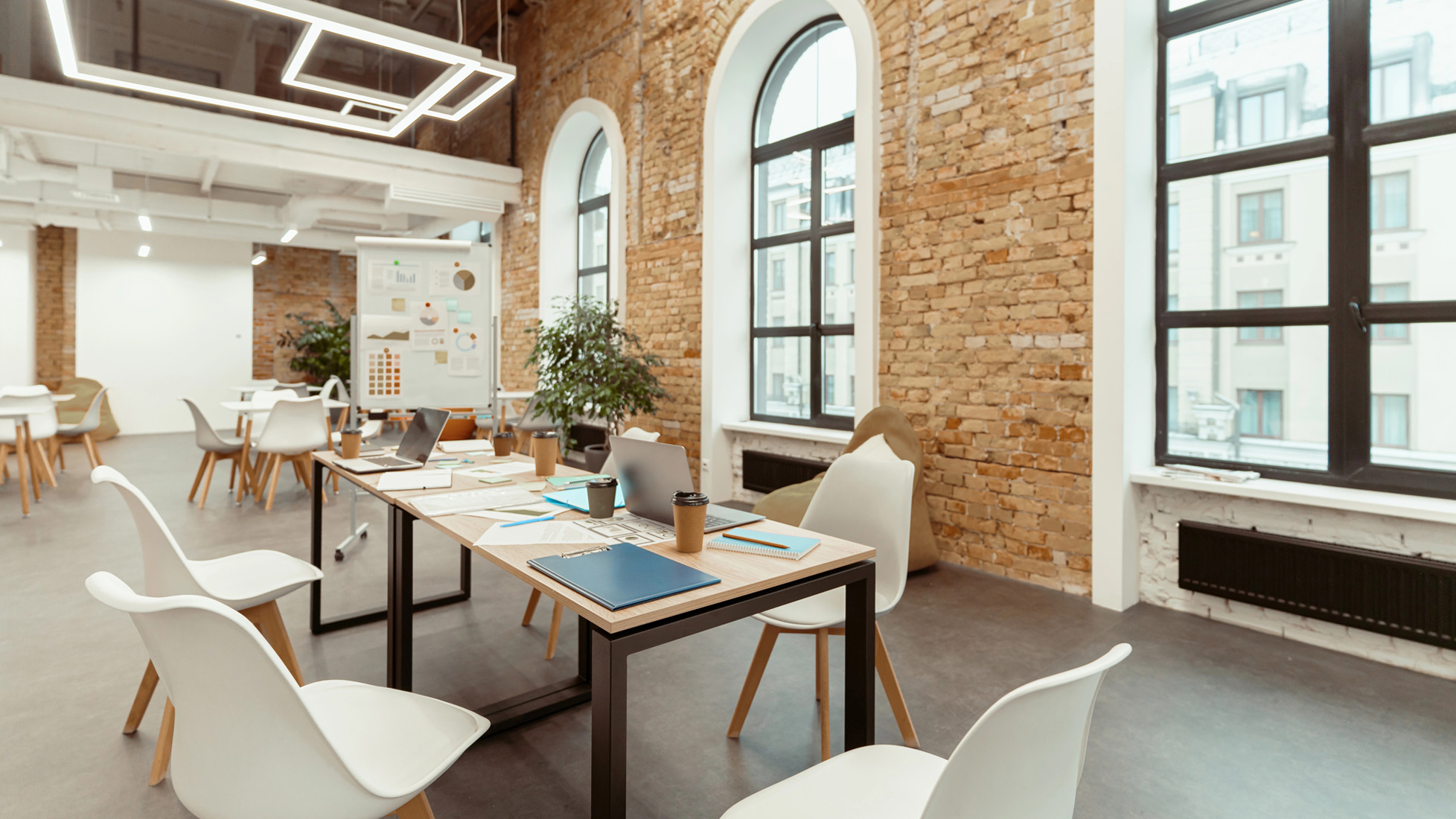


When it comes to office design and refurbishment furniture is very often overlooked or the last item on the list. However, office furniture shouldn’t be an afterthought or something that companies list at the bottom of their office design list. Office furniture should be treated as a vitally important asset when it comes to modern office design that can not only impact employee health and wellbeing but can also affect business outcomes and success. Office furniture is a business investment in health and productivity.
The Impact of Furniture In The Workplace
Office furniture can directly impact office space, some of the many reasons why are outlined below:
Ergonomics
Ensuring you invest in the right office furniture is an important part of any office design. The ergonomics (the scientific design of equipment to fit the human body, maximising comfort, health, and efficiency) of furniture is vital.
Where office furniture is poorly designed there can be a direct impact on staff health and wellbeing. Given that most staff will spend hours sitting at an office desk it’s important that office furniture is chosen not only for aesthetics but for physical health.
Musculoskeletal Disorders (MSDs)
When office furniture is poorly designed or designed simply to look good it can lead to MSDs as the furniture fails to properly support the body’s natural alignment, forcing the spine, neck, and hips into unnatural positions, causing undue back and neck pain, work injuries and physical strain.
According to the British Safey Council (BSC) “Nearly half a million, or 470,000 workers, suffered from new or long-standing work-related musculoskeletal disorders (MSDs) in 2020/21 with the neck, arm, shoulder and back accounting for most issues reported via Labour Force Survey data. According to HSE, 8.9 million days were lost in 2019/20 due to MSDs. Behind mental health, they are the second most common cause of ill health at work.”
The latest Health and Safety Executive (HSE) statistics (2024-2025) for MSDs show 1.9 million working people suffering from a work-related illness, of which 511,000 workers were suffering from a work-related musculoskeletal disorder, new and long standing, of which 173,000 were new MSD cases). 7.1 million working days were lost due to work-related musculoskeletal disorders, 14 days lost per case. This is a prevalence rate of 1,470 per 100,000 workers, comprised of 211,000 cases where the upper limbs or neck was mainly affected, 221 ,000 where the back was mainly affected and 78,000 where the lower limbs were mainly affected.
In 2024/25, musculoskeletal disorders accounted for 27% of all work-related ill health cases and 20% of all working days lost due to work-related ill health, with repetitive action/keyboard work accounting for nearly 14% of all MSDs. Interestingly the HSE found that “small workplaces (<50 employees) had a statistically significantly higher rate of work-related musculoskeletal disorders. Medium enterprises (50-249 employees) had a statistically significantly lower rate, while large (250+ employees) workplaces had a statistically significantly lower rate.” This may be due to larger and medium-size companies investing in expert advise when it comes to choosing the right office furniture for their workspace and staff.
Physical Fatigue
Badly designed office furniture doesn’t just cause MSDs it can also lead to fatigue. This is caused where furniture that lacks the right support forces the body’s muscles to stay tense and work harder to keep the body upright and balanced. This in turn results in a drain on physical energy.
When the body isn’t supported, and ends up slouching, blood flow can slow down which in turn increases the feeling of being tired. Where chairs don’t properly support the distribution of a person’s weight, sitting for extended periods can lead to restricted blood flow in the legs which can result in an increased risk of deep vein thrombosis and contribute to a person’s fatigue.
Slouching or hunching over in a chair can also compress your rib cage leading to restricted breathing and lowering the oxygen levels in the body which can also exacerbate that feeling of fatigue.
A ResearchGate paper on “An Ergonomic Office Interior Design Study on Improving Employee Performance and Job Satisfaction” “states that “The increasing complaints of employee fatigue, stress, and declining productivity caused by non-ergonomic office layouts have made the role of workplace interior design more critical in modern organizations” and concludes that “These results imply that ergonomic office interior design represents a strategic and high-value investment for organizations, not only for improving employee well-being and performance in the short term but also for strengthening job satisfaction, loyalty, and long-term organizational sustainability.”
Mental Fatigue
Where the body experiences physical pain and discomfort signals are sent to the brain that the body is stressed and the brain then has to work harder to try to ignore or negate the physical pain leaving you mentally as well as physically fatigued.
In the study “Research reveals sitting uncomfortably is impacting mental health of UK employees” by Leeds Beckett University’s Faculty of Health and Social Sciences which looked at the health and wellbeing of 4,664 workers who spent “a minimum of 6.5 hours a day at their desks” it was found that over 80% or employees were suffering from illness as a direct result of poorly designed workstations, leading to “one in five taking time off at an average of 14.5 days per sufferer” with “the financial cost to businesses is more than £7 billion.”
The study goes onto say that the employees “long-term health and wellbeing is seriously at risk with the average employee suffering from chronic conditions and mental health problems from prolonged sitting at badly set-up workstations.”
Senior Lecturer in occupational science and occupational therapy at Leeds Metropolitan University, Miranda Thew says, “The results of the study present strong evidence that link mental health and chronic pain, in that one can be the cause of the other and that chronic pain can often arise from musculoskeletal problems brought on by poor ergonomics. Conditions arising from poorly adapted computer-based workstations range from sore muscles to chronic pain or carpal tunnel syndrome, repetitive strain injury, eye strain, headaches and chronic fatigue. Such conditions can lead on to reduced quality of life and therefore further reducing capacity to work. By sitting in an unnatural position, or prolonged static postures together with repetitive movements can lead to a muscle imbalance, which in turn leads to neuropathic disorders and chronic pain.”
Ergonomic Furniture
Companies that invest in ergonomic office furniture can see a number of benefits:
Cornell University productivity calculator gives an estimate of the financial benefit from an increase in productivity that can arise from an investment in office ergonomics and reports that “studies in Ergonomics literature suggest that productivity increases should be in the range of 5% to 15%, with a median of 12% (based on 25 studies).”
Alan Hedge, professor of design and environmental analysis in the College of Human Ecology at Cornell and director of Cornell’s Human Factors and Ergonomics Laboratory reported that “the computer workers who had access to the adjustable work surfaces also reported significantly less musculoskeletal upper-body discomfort, lower afternoon discomfort scores and significantly more productivity.”
The National Library of Medicine paper “Fore-Warned Is Fore-Armed: Effect of Musculoskeletal Disorders on Sickness Absenteeism” states that “MSDs cause an economic burden as they lead to disability, absenteeism, and reduced productivity… an ergonomically acceptable workplace with considerate rest periods will help enhance productivity.”
Ensuring that staff have high-quality ergonomic chairs and adjustable sit-stand desks that enable good posture by correctly aligning the spine, neck and hips can significantly reduce or remove the risk of MSDs, neck and back pain as well as repetitive strain injuries which in turn can significantly reduce the many days lost to MSDs.
Good quality ergonomic office furniture that provides the right support will leave staff feeling comfortable and they’ll experience far less fatigue and fewer physical and mental distractions enabling them to focus on their work and maintain their energy levels throughout the working day.
Defining Space and Pathways
Office furniture is one of the most important and powerful office design tools in shaping and defining the workspace and staff behaviour. Office furniture shouldn’t be considered as individual office furniture pieces but instead furniture should be evaluated for how pieces of furniture can come together and be used to subtly guide, encourage and affect how employees move, interact and behave and how traffic flows within that workspace.
Zoning
Instead of building walls to create workspace areas, office furniture layout can be used to define and establish clear zones.
“Zoning” is a great solution in open plan office spaces and by defining zones staff can be encouraged to work in specific ways. This work behaviour is directly influenced by the type of office furniture that is present in each zone as it helps to guide staff to workspace that’s setup for specific tasks.
Some of the most commonplace workspace zones include:
- Formal team or collaborative spaces which enable staff to come together to work in teams. This type of workspace would be defined by the grouping of desks or modular furniture that can be adjusted depending on team size, as well as the use of acoustic screens and mobile white boards or acoustic panels with dry-erase surfaces.
- Informal meeting zones which utilise softer seating options including modular sofas and armchairs or high-backed seating booths that provide visual and sound privacy without the need for fixed walls. Lightweight chairs, or stools and nested tables that users can easily reconfigure can facilitate quick, casual catchups or stand-up meetings.
- Breakout areas are another popular office zone. Breakout areas enable staff to take a break and switch off from work for a period of time when the brain simply needs a chance to do something different, or to rest and recharge. Breakout areas typically have informal, comfortable chairs or beanbags that are purely designed to help staff to unwind and relax and socialise.
- Formal meeting areas whose purpose is to provide a space for company wide meetings tends towards more formal high-end furniture, high backed chairs and a meeting table with integrated video conferencing.
- Quiet zones are usually identified by the use of acoustic and ergonomic furniture designed to absorb sound, block visual distractions, and support work that requires focus and concentration. This can be anything from acoustic booths and pods which can be semi-enclosed or fully enclosed, and which block out external sounds and provide privacy to an area to acoustic screens and high-backed chairs which absorb or deflect ambient noise.
Colour can also play a role in emphasising and marking out workspaces. By using colour for different office areas, it cues staff to their use and encourages staff to move to that area when their work requires it. As an example, the use of blue and green furniture tones can be used to highlight quiet spaces while warmer colours like orange or yellow can be used for breakout areas or to encourage collaboration.
Utilising different furniture for different workspace types e.g. space that’s meant for collaborative work or more quiet focused work can help to make it clear there are different zones for different activities.
By designing with zoning in mind and utilising a variety of furniture within each zoned area staff are more likely to use the spaces best aligned with their needs and tasks. It’s also more likely that staff with move about the office space rather than being sedentary.
Workflow
Office furniture can be placed within an office space to act as a subliminal system to steer and direct the flow of staff throughout the workday. If done correctly it can create a natural flow. In essence furniture should guide rather than obstruct.
This can be achieved by using furniture to define pathways and routes through a large area while separating space for work zones, breakout areas and equipment zones. When the furniture layout is right it should look and feel seamless, providing a strong foundation for everything else that follows.
Utilise low profile storage and bookcases to line main walkways to act as a path and a natural boundary between staff moving between areas and working staff. Cabinet planting and containers or mobile planters can establish green corridors that steer staff around high-density areas working areas, while providing the “greenery” and nature that many office spaces lack. Folding or sliding partitioning and acoustic screens can be moved to make new pathways or open up areas when projects and teams change.
Soft, comfortable seating and high-backed chairs in open spaces can guide staff from active work areas towards quiet, semi private spaces or breakout areas. Modular furniture and larger tables can also be used to lead staff towards areas for meetings or group brainstorming sessions. Office pods can serve as a way to draw staff towards designated private spaces that provides specific space for private work or small two or three person meetings.
Using furniture to define the layout of office space and encourage the flow of staff throughout the workspace allows a business to maximise the efficient use of available office space. It also helps to provide clear layouts which ensures staff know where to go, without the need to build physical walls. Without physical walls comes a greater degree of flexibility as modular and mobile furniture can be reconfigured when teams get smaller or projects expand and require larger teams, enabling business to make changes more easily as and when required.
Creating zones without walls also opens up space to natural light and sightlines. It can also make spaces feel larger and more open and balanced. Rather than cutting staff off from one another furniture can provide a more subtle divide which gives people an element of privacy while still maintaining an openness that physical walls could not achieve.
When office furniture is used to define space and workflow it can also have an impact on productivity by helping to create physical clarity, reduce clutter, reduce distractions as staff are directed through the layout and by signalling to staff when they are approaching quiet, private areas.
A ResearchGate paper found that “The arrangement of the office space and the overall office design, which includes workflow play a crucial role in employee satisfaction and makes a positive impact on the well-being of the employees. The findings indicate that office furniture and ambient temperature positively affects employees’ productivity. This suggests that organizations can enhance productivity by paying attention to these specific aspects of office design. Using furniture to define space and workflow allows you to organize open areas, improve movement, and enhance productivity.”
Enhancing Operational Efficiency
Office furniture plays a vital role in the day to day running of all businesses.
Ergonomic office furniture enhances the operational efficiency of a company by ensuring staff comfort, providing clear pathways and work zones without walls, enabling flexibility and futureproofing and reducing clutter.
Ergonomic desks or sit-stand desks and chairs provide staff with a comfortable workstation setup which helps to avoid back pain and repetitive strain injuries. When staff are comfortable, they are able to concentrate and maintain focus rather than spend time shifting position to get comfortable thereby losing concentration which impacts wellbeing and productivity.
Office furniture also plays an essential role in office layout. An optimised office layout directly improves operational efficiency by ensuring the best use of office space, streamlining workflow and balancing a company’s need for privacy and collaboration. Modular and mobile office furniture allow businesses to be more flexible providing much needed adaptability when operational requirements change or need to adapt, allowing teams and individuals to rapidly adjust to accommodate changing project requirements or protocols.
Integrated office furniture solutions and built-in desk cable-management systems provide the means to organise and declutter the workspace. A clutter free workspace means less distractions and time spent trying to find misplaced documents. It minimises frustration and friction and helps to create a streamlined workplace which is more aesthetically pleasing.
The use of high-quality furniture also signals to staff that they are valued which can boost staff morale and wellbeing which correlates with higher staff productivity and lower absenteeism rates.
Shaping Company Culture and Brand Identity
Office furniture can speak volumes with regards to a company’s values, brand identity and company culture.
The type of furniture used can signal whether a business is traditional or modern or even cutting edge. Heavy wood desks and leather chairs indicate authority and trust; minimalist, modular or mobile furniture are more likely to be used by more modern companies such as technological or media agencies, who need to adapt quickly. Companies who want to demonstrate their commitment to sustainability choose eco-friendly or recycled materials, and materials that are responsibly sourced.
Companies prioritising staff health and wellbeing, comfort, and long-term retention and attraction of staff are more likely to invest in ergonomic desks and chairs which can act as a powerful tool for boosting job satisfaction, morale, productivity and talent retention and attraction.
Furniture can also impact visitor experience. Having a welcoming reception area and space set aside with meeting or conference furniture can help to establish an instant positive and professional message and signpost a company’s standard of quality before a meeting even starts.
It’s clear that office furniture can be impactful when used in the right way and should play a major role in all office design and refurbishments.
JBH Refurbishments, Experts In Office Design and Refurbishment
JBH Refurbishments are a cat a and cat b fit out contractor and have over 30+ years experience in Kent and London inclusive office design, office refurbishments and fit outs.
As part of every office design and fit out project, we offer an exclusive workplace furniture consultation. Our clients are invited to visit our showroom in the heart of London to for a “try before you buy” experience to test, feel and see a range of products that have been carefully selected to meet your office design and budget. You’ll have the opportunity to try different chairs and see how they can be setup to suit different heights, seating positions and comfort to ensure it’s the right chair for you.
Our office furniture consultation is a crucial step in understanding your Kent or London office refurbishment needs to ensure your office fit out delivers at every stage.
You can contact us on 0333 207 0339 or via our contact page for a free on-site consultation.